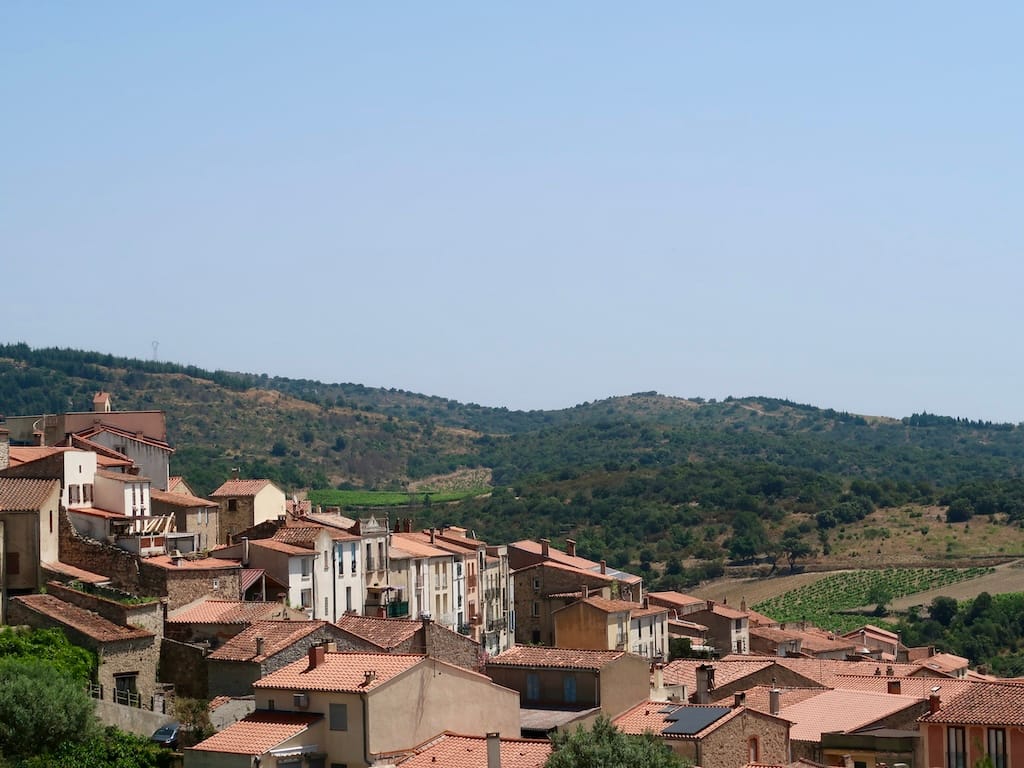
Belésta.
Bélesta in Nadine’s Childhood and Youth
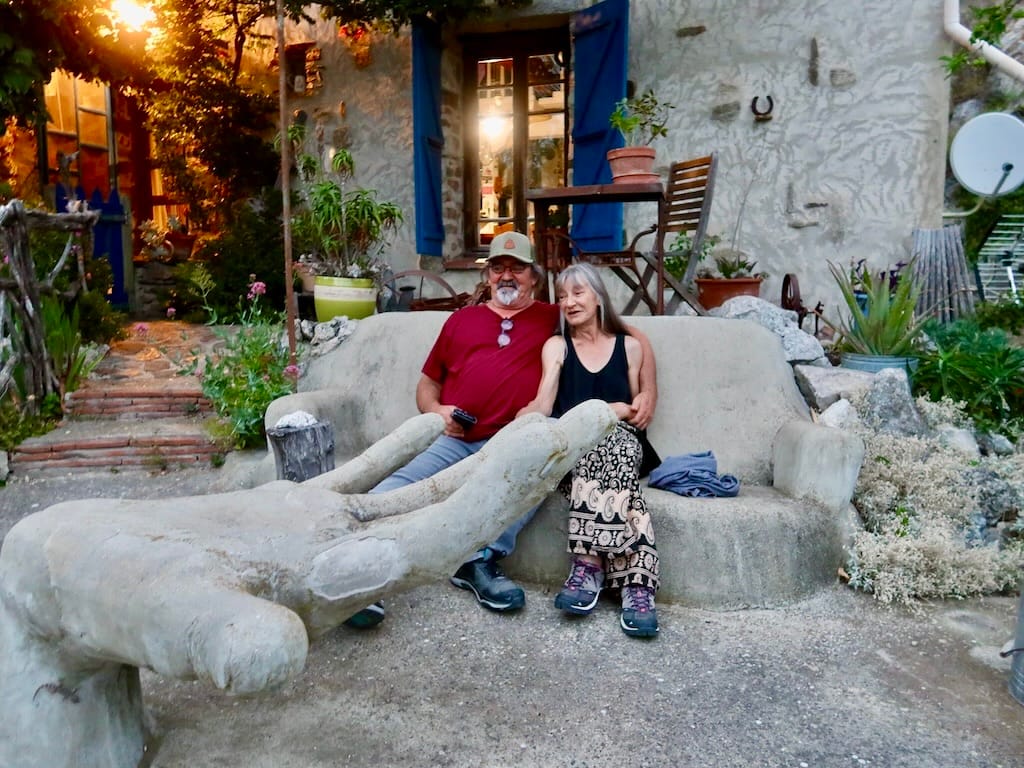
Nadine Paihassa supplemented her husband Eric's life story with an account of Bélesta in the 1960s. Rie Hedegaard translated her tale.
Nadine Paihassa was born in 1961 in Paris. Her mother came from Bélesta, her father from the same region, and the family went on holiday to Bélesta every summer. In 1968, they moved permanently to Bélesta, where her father became a wine farmer. Nadine's memoirs describe the period in the 1960s. Eric moved to Bélesta in the late 1980s.
When I was a child, Bélesta was surrounded by vineyards. In some fields, a shepherd would tend to the village's sheep, and in the evening, they were led home to the houses in town. There were two stables, where sheep, horses and donkeys spent the night. Many had rabbits for breeding in the basement. Some had dachshunds, which were used to hunt wild rabbits. There were also chickens, cats and dogs. Water was collected from two springs. Seven houses had their own well. During the 1960s, most houses were fitted with toilets and bathrooms.
A traveling butcher came and slaughtered our meat. The cellar smelled wonderful of the luncheon meats that we produced ourselves. In the summer, all the streets smelled of tomatoes. The tomatoes were pressed, then the tomato pulp was hung up in a clean cloth so that the liquid could drain off, and finally the tomato concentrate could be scraped into jars, which were then stored for use the following year.
My great-uncle Germain was the town shoemaker. He was hunchbacked and very friendly. I loved watching him work. He always had his cat on his shoulder. He was often paid with a pack of tobacco or some vegetables and sometimes with money. Close to his workshop was a forge. The blacksmith had arranged his tools carefully. His anvil was about 40 cm x 100 cm. It smelled strongly when the horses were shoed.
There was also a barber, three merchants, a bakery and a café, which was looked after by Meme Marcelle. Like all elderly widows, she was dressed in black and with her grey-white hair tied up in a bun. There was an open-air cinema in the square, where films were shown once a week, everyone brought their own chair. In the evening, elderly women sat in the streets on their low chairs and looked after the smaller children who were playing there. They often stayed until midnight to enjoy the cool air.
The village festival was held at the end of August. Three days in a row with a party in the square with an orchestra, dancing and a big communal meal. During those days, you could go around to your neighbours, knock on doors, maybe sing a song and be invited in for a drink. The members of the orchestra were invited to eat with different families. On Sundays, there was sometimes a barbecue at the Caladroy wine castle, where the residents of Bélesta also took part.
For Easter, bougnette were baked in huge pans. The dough was first made in a large tub. The women, who sat on small chairs in groups in the streets, wearing white and embroidered aprons, carefully pressed the dough thinly before it was baked on the pans and sprinkled with sugar. Meanwhile, the men enjoyed themselves by the barbecue, where they could drink the sweet homemade wine. Each farmer made his own wine.
“Roc” was a special activity that took place in the late summer evenings. A group of young people tied a stone to the end of a long rope so that it hung down in front of the entrance door. The stone could now knock on the door and wake the residents, without the young people at the end of the rope being seen. When the residents were woken up, they either ran after the young people and scolded them, or they opened the cellar and invited them to taste the wine in their barrels.
The September wine harvest was a very special and wonderful experience. It was hard to cut the grape bunches, but it was also days filled with joy and humour when the many people worked together.
Back then, there were many more insects and birds in nature. The seasons felt more distinct. There could be snow in the winter with days when you could go cross-country skiing. There was more rain in the spring and autumn. The summer days were warm, but there was rarely a heat wave like now.
June 2025.