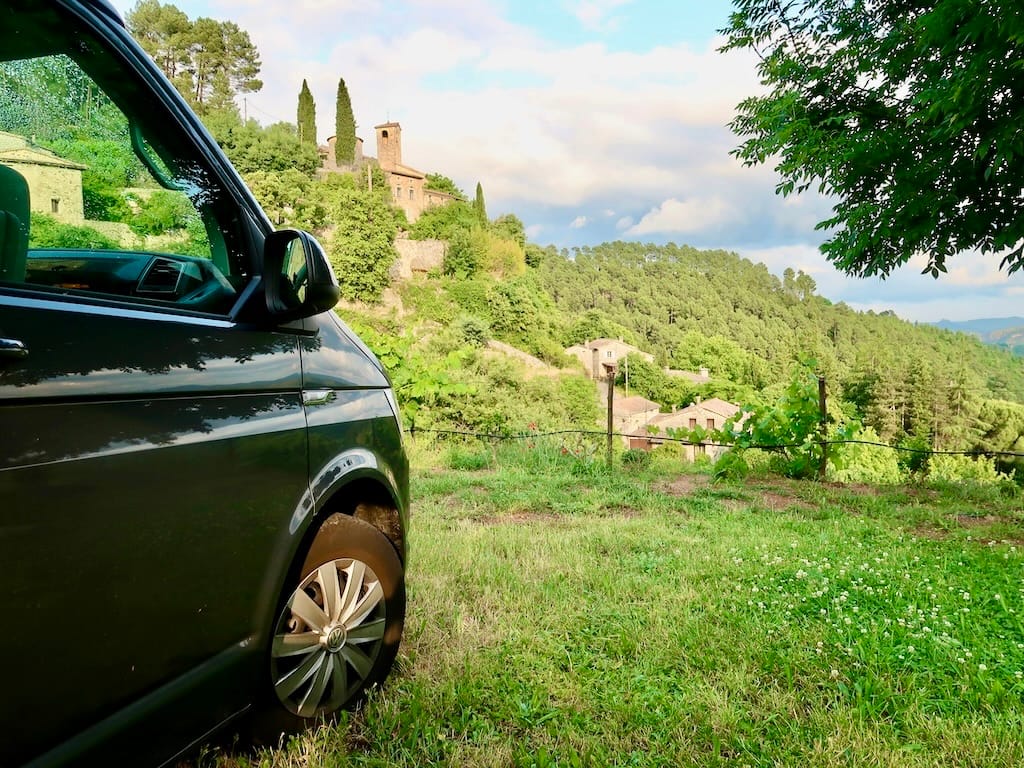
Our VW California in Vernon.
Cultural camping, Europe and the world
We drove 6,985 km on the entire trip and camped 15 places in France within 62 days. France has good roads and good campsites.
Traffic and camping
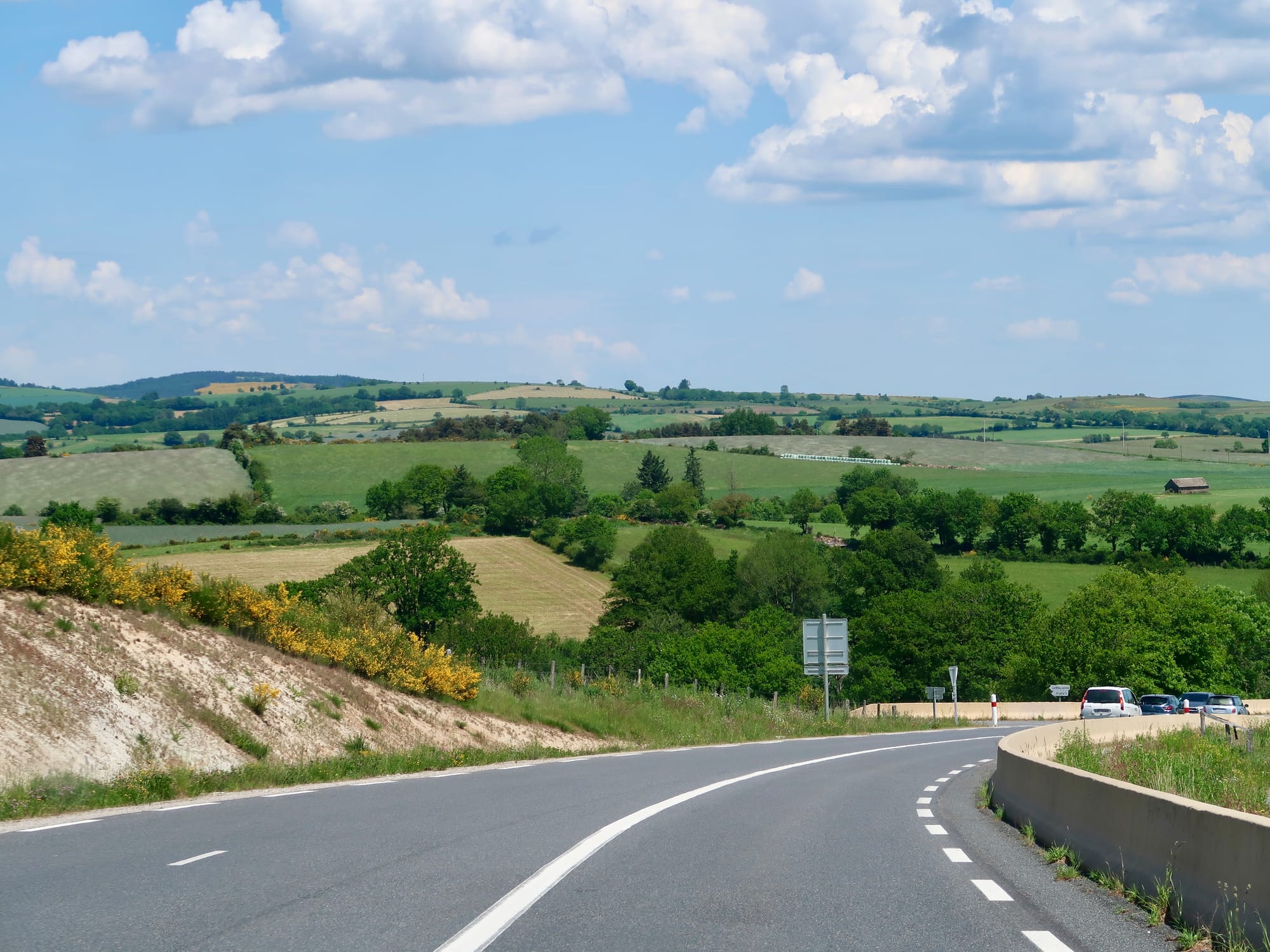
French road maps reflect the country's tradition of centralism, the roads spread out from the centre of power, Paris. The journey took us along mountain roads with many bends, along country roads, through cities with a 30-kilometer speed limit, and along motorways with photo surveillance and well-functioning payment systems. We experienced beautiful landscapes, and reached historic city centres through modern concrete suburbs. The French drive safely but impatiently. The horn sounded immediately behind us when we hesitated.
The police were visible, police raids on the motorways and heavily armed officers in the cities were frequent. We saw a few traffic accidents. Only once did mobile coverage drop out on a deserted stretch. We used the car more frequently than usual from campsites to attractions. It worked except in Nice, which hosted the international ocean conference. When we unfolded the bikes, there were safe routes in the cities and on the countryside. Paris is being transformed into a cycling city under Mayor Anne Hidalgo, but we chose public transport because of the distances.
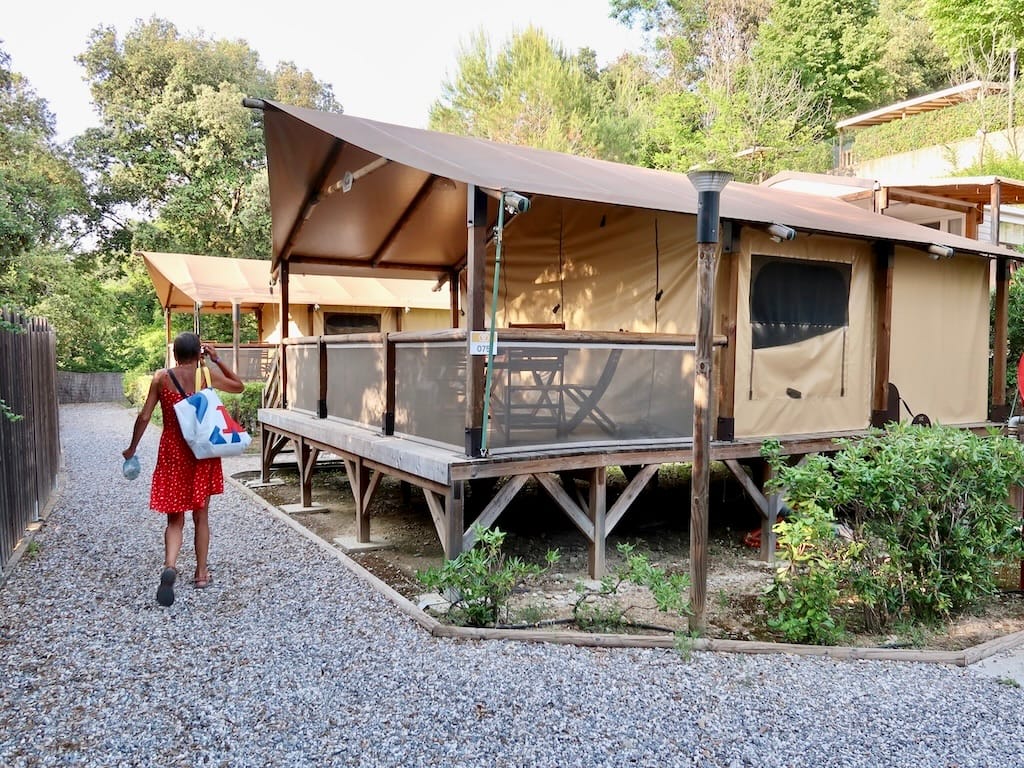
French campsites have a high standard with well-functioning service facilities and friendly service. This is true whether they are run as family sites or by international companies such as Huttopia and City Kamp. In Cagnes-sur-Mer, we tried a glamping tent for three adults for the first time. Digitalization has been introduced, for better or worse, the sites have websites with booking facilities, telephone registration is sometimes rejected, and the number of emails before and after the stay is in some places unnecessarily large. The tap water is drinkable, but the taste meant that we often preferred bottled water.
We have enjoyed the international French Decathlon chain, which sells quality outdoor, camping and sports equipment at affordable prices. When we needed something, there was a store nearby. You will not lack for anything in France. When we were looking for a cable for an iPhone in Perpignan, we found a Danish Flying Tiger Copenhagen.
Culture and history
France is a European cultural nation with a dramatic history and a rich heritage, which the trip gave many impressions of. We saw seven of the country's 54 contributions to the UNESCO World Heritage List of culture and nature. We also tasted French flutes and gastronomy, which are two of its contributions to the intangible world heritage.
Charles de Gaulle established France's Ministry of Culture and Communication in 1959. It was given responsibility for culture, art and media. The country's first Minister of Culture, the politician and writer André Malraux, served until 1969. He is buried in the Pantheon. The independent organization Alliance Française, which disseminates French culture and language abroad, was established in 1883.
The cultural institutions we visited had high quality and up-to-date dissemination. We experienced informative exhibitions with objects, texts, photographs, film clips and audio guides sometimes controlled by QR codes. At all major museums, there were several languages including English. We saw the Bayeux Tapestry with explanations in Danish. In some places, we borrowed a so-called HistoPad, which combines text, sound, images and 3D reconstructions of the past. The idea is good, but our impression is that it requires further development to become informative rather than confusing. We had to ask helpful custodians for assistance. Several institutions were completely or partially closed due to major renovation projects, including the Louvre and the Centre Pompidou.
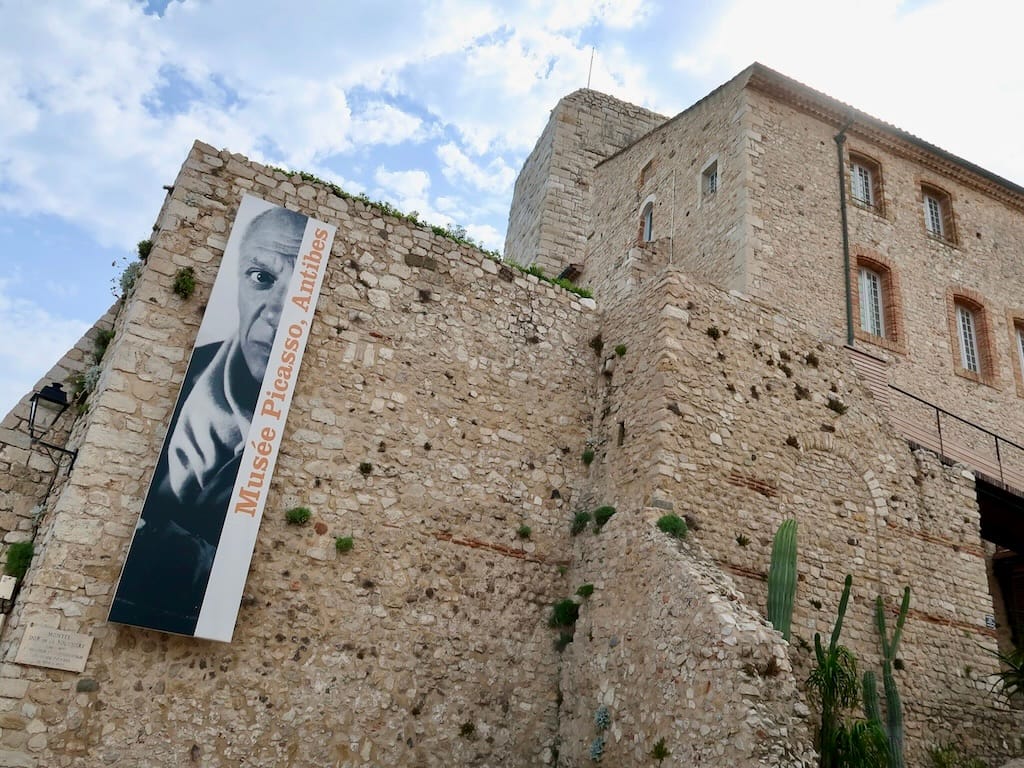
We had a particular focus on museums and exhibition venues that presented the modern breakthrough in art around the previous turn of century and trends in contemporary art. Overall, they gave the impression of France as a meeting place for artists seeking expressions for a changing world. Pablo Picasso's lifelong artistic development is an inspiring example of this.
The areas that make up modern-day France were inhabited by Celts. Caesar conquered them half a century BC, and until the 5th century they were a Roman province. The impressive Pont du Gard aqueduct and similar structures show that the Romans were not quite as “crazy” as they are portrayed in the Asterix cartoon.
In the Middle Ages, the central power was weak, and the country was divided into independent regions. Construction of the Mont Saint-Michel monastery began under Bishop Saint Aubert in 708. Construction of the recently burned and rebuilt Notre-Dame Cathedral in Paris began under Bishop Maurice de Sully in 1163. The Bayeux Tapestry tells that the Norman prince William the Conqueror gained his epithet by winning the English throne in 1066. During the Hundred Years' War from 1337 to 1453, England occupied most of France, and Joan of Arc became a folk hero in her rebellion against the invaders. In the 14th century, the popes moved from Rome to Avignon.
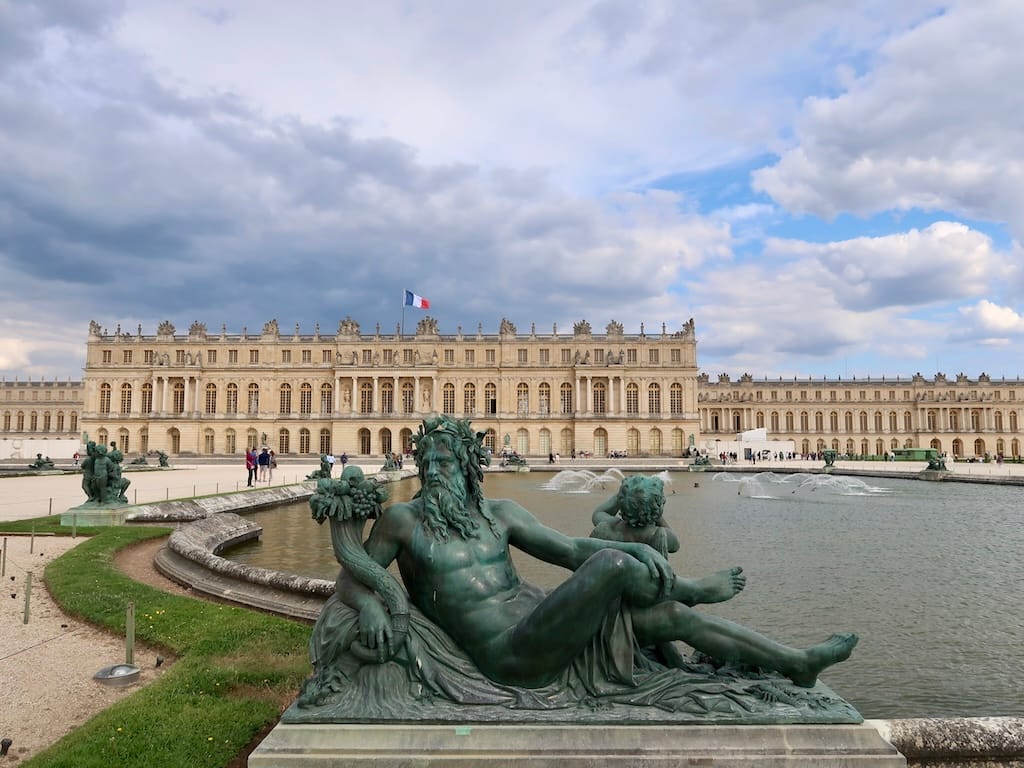
The Sun King Louis XIV ruled as an absolute monarch from 1643 to 1715 and built Versailles. Under him, France became Europe's leading power politically and culturally. The privileges of the absolute monarchy were abolished with the revolution of 1789-99, which was followed by changing empires and republics. Alsace and parts of Lorraine have been French or German depending on the outcome of wars. The border has moved four times since the Franco-Prussian War of 1870-71. We experienced Strasbourg's legacy from both cultures, and the city's role as host to European institutions created to secure peace and the rules-based world order after The Second World War.
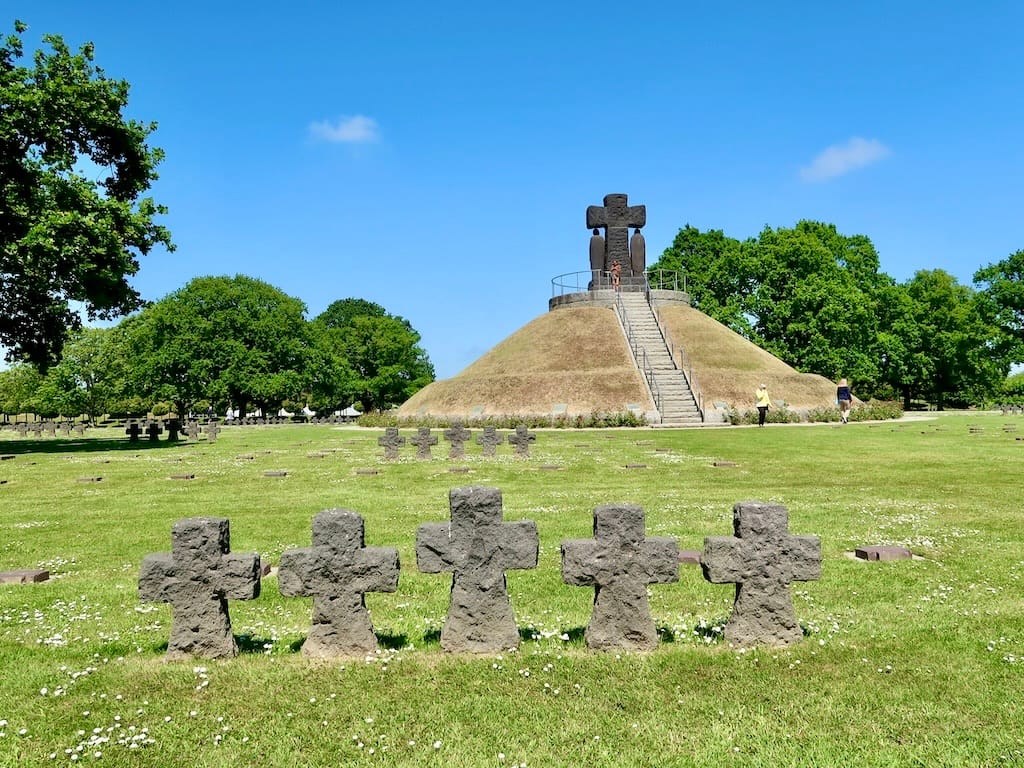
The First and Second World Wars hit France hard. We saw examples of this in the war museums of Normandy and in Oradour-sur-Glane. The Fourth Republic from 1946 was in 1958 replaced by the Fifth Republic, which is still alive. The country’s tradition of popular protest was continued by the May 1968 uprising and the Yellow Vest movement. We met demonstrators in yellow vests as we drove through France on our way to England in 2019. In May and June 2025, we saw none, but in September there were strikes and demonstrations in many places against public austerity plans. Social inequality is visible in France, and in the larger cities we passed groups of homeless people and immigrants in tents and sleeping bags outside shops and churches.
Heatwave and climate
We started the trip with sun and warm weather in Alsace, moved through windy and cool weather in Paris and Normandy. We experienced pleasant temperatures again in central France. In southern France, where the thermometer reached 35 degrees and more, we appreciated campsites with shade, siestas and a dip in the sea or a pool. As on our trip to Italy 2022, we felt the climate changes first hand, but this time we had learned to adapt our clothes and pace to the heatwave. When we reached Germany and lower temperatures on the way home, it was a relief.
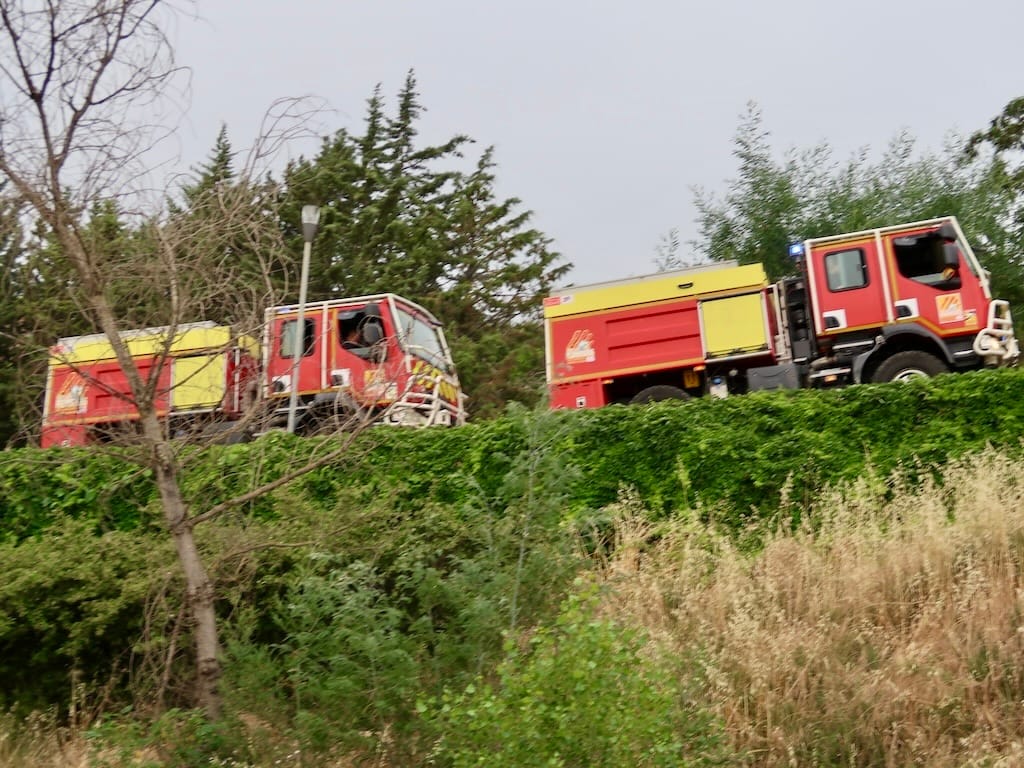
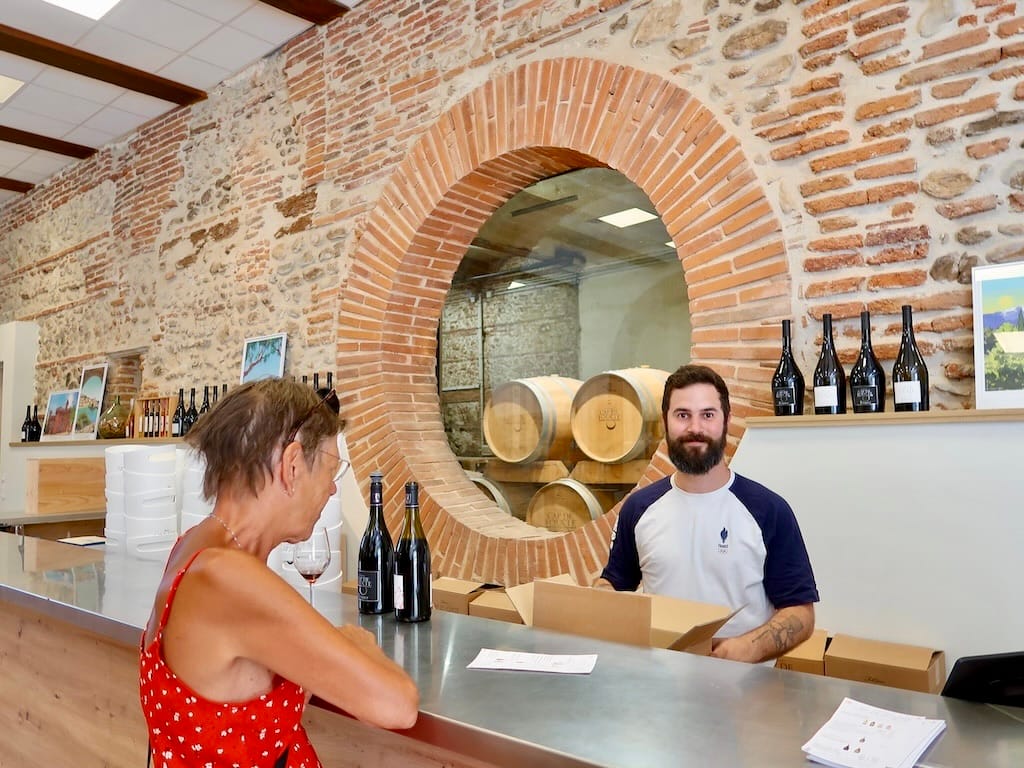
At Lac de la Raho, we saw smoke from a forest fire on the other side of the lake and a helicopter with a water bag. In Bélesta, we experienced a fire drill with firefighting vehicles. In a vineyard, withered vines were piled up. Winegrowers told that they harvested earlier and imported grape varieties from Spain that could better withstand the heat. In the Bay of Mont Saint-Michel, some locals were unsure whether mussel farming would survive the rising water temperatures in the long term.
Hopefully, the global fight for the climate has gained enough momentum to overcome the political resistance from powerful countries. The negotiations at the COP30 in Brazil this fall were difficult, but an agreement was reached.
France, Europe and the world
When we asked French people about their views on the political situation in the country, we usually got a politely evasive answer. The question was perhaps considered inappropriate. President Emmanuel Macron was first elected in 2017 and re-elected in 2022, he cannot run in 2027. France is economically pressured by a national debt of 3.4 trillion euros, equivalent to around 114% of the country’s GDP. Macron has implemented many of the reforms, he was elected on, but they have met popular and political resistance.
In the European Parliament elections in June 2024, the president’s Besoin d’Europe list led by Valérie Hayer suffered a major defeat to the Rassemblement National under Marine Le Pen’s successor Jordan Bardella. Macron responded by immediately calling a general election, which resulted in a fragmented political landscape and paralysis of action. The art of compromise is not an inherent part of French political tradition. The president has since appointed five prime ministers. Most recently Sébastien Lecornu, who is working to get a Finance Act for 2026 passed.
In foreign policy, Emmanuel Macron has from the beginning been a strong voice for European cooperation and strategic autonomy. After Donald Trump’s 2nd inaguration as US president in January 2025, Macron has made committed contributions to political leadership in Europe. This has led to many trips and convincing speeches. We have particularly noted visits to Washington, Kyiv and London about the war between Russia and Ukraine. As well as visits to Copenhagen and Nuuk in support of the resistance to Trump's threats to take over Greenland. Macron's moral support for Ukraine has not been followed up by matching financial support.
Perhaps the most important task of Europe and the EU in the coming years will be to find the continent's place in the world order that is emerging in the tensions between the USA, China, Russia and the Global South. The presidents of the three great powers have expressed desires for regional expansion and dominance. The Global South wants increased influence and compensations for the exploitation and climate destruction by the industrialized countries.
European politicians are careful to maintain transatlantic bonds. The peace talks in Ukraine, Trump's threats to Grenland as well as the midterm and presidential elections in the United States will be benchmarks for the strength of the bonds. The current US administration has distanced itself from values that Americans and Europeans used to share. Researchers consider, whether America can still be characterised as a democratic society.
In France, we talked with Americans who regretted the development and were critical of their president. We both met American culture and hospitality when we were young. Lars as an exchange student in the 1960s, Hanne on a trip in the 1970s. During our tour around the world in 2004, we experienced the country's growing political polarisation.
A wisely rearmed and coordinated Europe should stick to its role as a cautious advocate for liberal democracy and a multipolar, rules-based world order. Credible international agreements on climate protection, biodiversity, human rights, peace and disarmament are important for all life and for the survival of humane societies.
During a visit to Copenhagen, French President Emmanuel Macron said in response to a statement by Danish Prime Minister Mette Frederiksen, who drew simplistic parallels to the interwar period: “We must be strong, and we must be able to deter in the event of aggression, but we must also be very cautious”. The Prime Minister has hopefully taken the President’s words to heart. (Politiken 2.10.2025 - my translation)
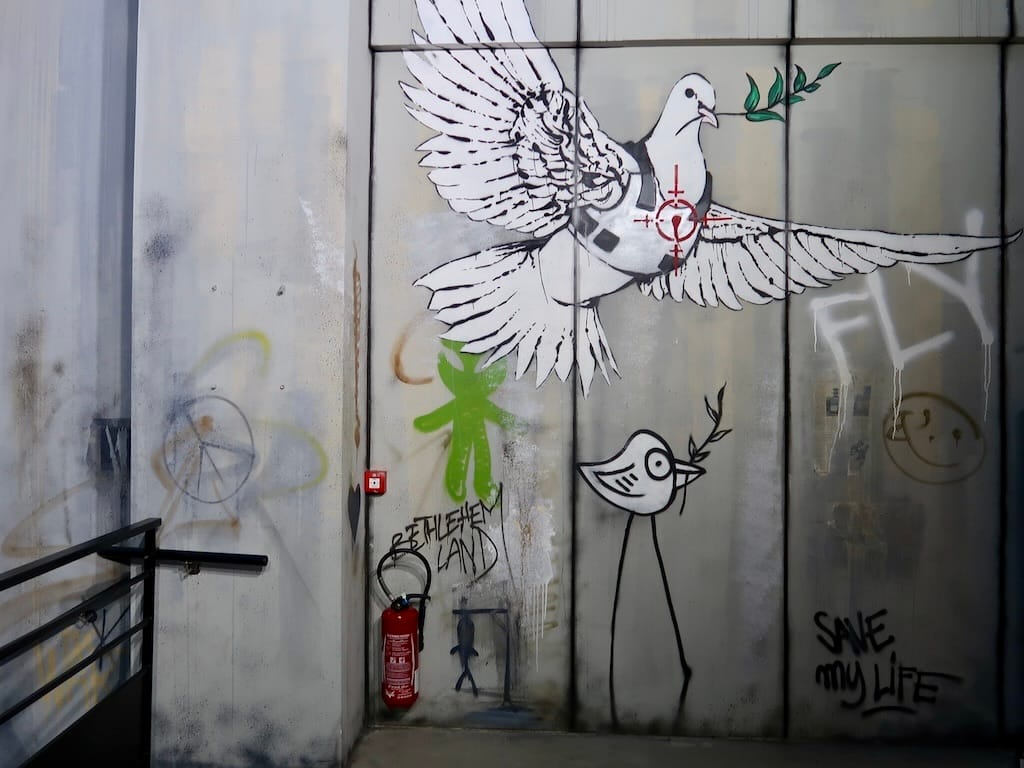
On a monument in front of UNESCO’s headquarters in Paris, the preamble to the UN organization’s constitution from 1945 is quoted in several languages: “Because war begins in the minds of men, it is in the minds of men that the defense of peace must be built.” It is an important message to posterity from the generation that experienced World War II.
References
Travel guides etc.:
Alexis Averbuck m.fl.: Best Road Trips France. 2022.
Frederik Crone: Turen går til Midtfrankrig. 2016.
Frederik Crone: Turen går til Provence og Sydfrankrig. 2020.
Torben Kitaj: Turen går til Alsace Lorraine & Champagne. 2020.
Aske Munch: Turen går til Paris. 2023.
Ove Rasmussen: Turen går til Normandiet & Bretagne. 2020.
Europas smukke veje 47 berømte bilture samt komplet Europa-vejatlas. 2007.
Alphonse Daudet: Breve fra min mølle. 1964.
René Goscinny and Albert Underzo: Asterix and the Normans. 2021.
Mette Reinhardt Jacobsen: Ingen vil bo i Thionville. 2022.
Mette Reinhardt Jacobsen: No. 54. 2018.
Forsvarets Efterretningstjeneste: Udsyn 2025. December 2025.
National Security Strategy of the United States of America. November 2025.
Film and TV among others:
Anne og Anders i Europa: Nabostrid i Nordfrankrig. 2022.
Art Trails of the Riviera with Kate Comer. 2012.
Bille August: Les Misérable. 1998.
Jean Becker: My Afternoons with Margueritte. 2010.
Bernardo Bertolucci: The Dreamers. 2003.
Luc Besson: Jeanne d’Arc. 1999.
Martin Bourboulon: Eiffel. 2021.
Gilles Bourdos: Renoir. 2012.
Leos Carax: Les Amants du Pont-Neuf. 1991.
Christian Carion: Driving Madeleine. 2022.
Henning Carlsen: Gauguin, le loup dans le soleil. 1986.
D-Day: 100 Days to Beat the Third Reich. 2023.
Édouard Deluc: Gaugin - Voyage de Tahiti. 2017.
Emily in Paris. The seasons 1. 2020 and 4. 2024.
Anne Fontaine: Coco Before Chanel. 2009.
Lea Glob: Apolonia, Apolonia. 2022.
René Goscinny and Albert Underzo: Asterix and the Normans. 2021.
Denis Imbert: Sur les chemins noirs. 2023.
Jan Kounen: Coco Chanel & Igor Stravinsky. 2009.
Picasso. 2024.
Pissarro: Father of Impressionism. 2022.
Rebuilding Notre Dame. 2023.
Rejsen til slagmarken with among others Cecilie Nielsen. Selected episodes 2016-18.
Alan Rickman: A Little Chaos. 2014.
Ridley Scott: Napoleon. 2023.
Éric Toledano og Olivier Nakache: The Intouchables. 2011.
Jacques Vichet: The Greatest Painters of the World: Henri Matisse. 2016.
The Danish Collector: Delacroix to Gauguin. 2022.
The Wonders of Europe. Selected episodes. 2022-24.
In addition, materials collected along the way, Danish, French and international media as well as resources on the internet.
December 2025.