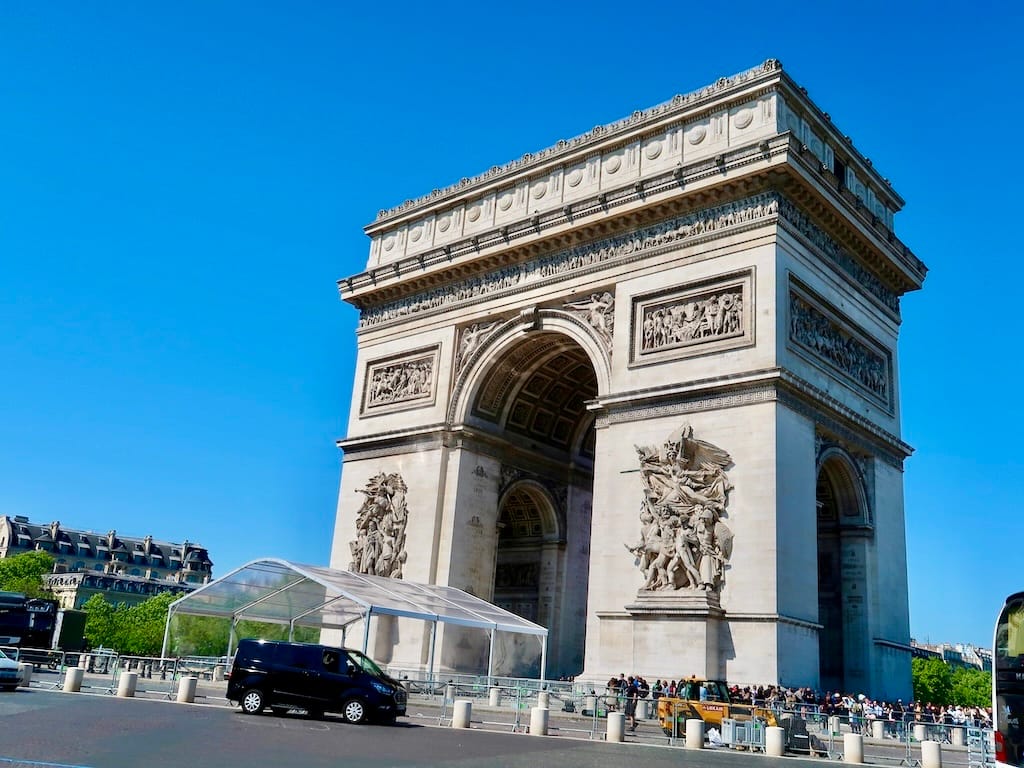
Napoleon's Arch de Triomphe for victorious wars.
France
After an overnight stay in German Kassel, we reached French Strasbourg, which is the capital of the historic border region of Alsace. From the Franco-Prussian War in 1770 to after World War I in 1919 and during World War II from 1940 to 44 the city was German. It is home to important European institutions and calls itself the “Capitale Européenne”. On walks, bike rides and a boat trip we experienced Strasbourg’s French, German and European history.
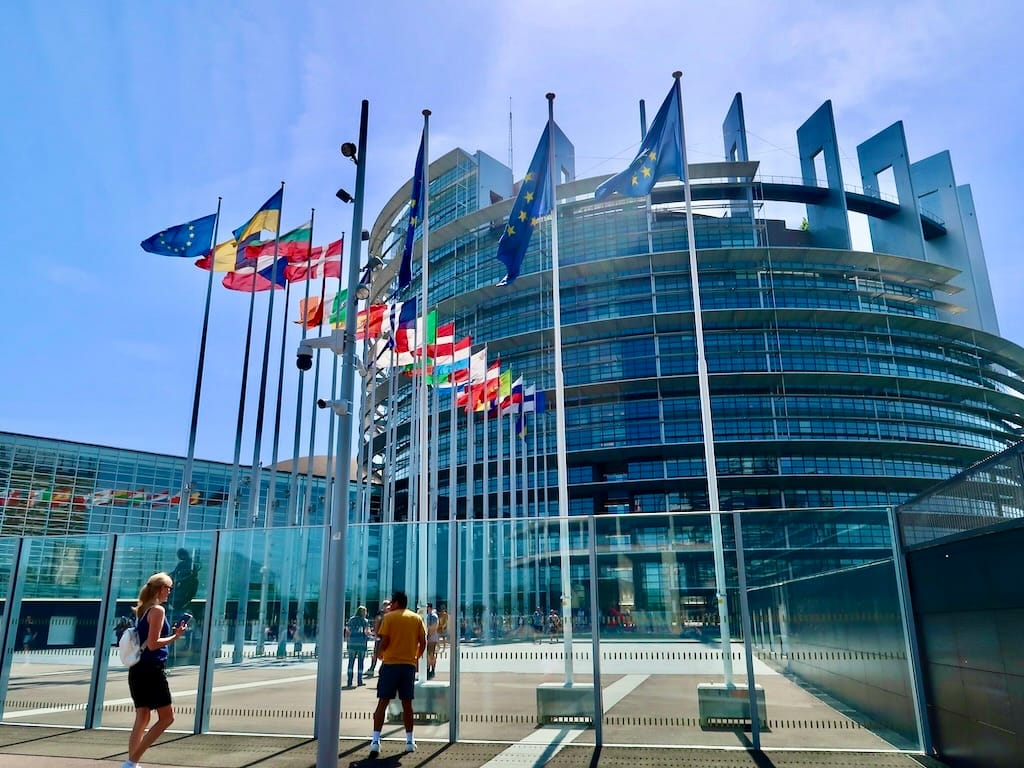
Strasbourg with French, German and European culture
Our base was a campsite in the middle of the city. We started with a visit to the gothic-sky-reaching Notre-Dame Cathedral on the island of Grande îlle. We walked in the surrounding old parts of the city with narrow streets, beautiful medieval and renaissance houses, inviting squares, shops and a flea market.
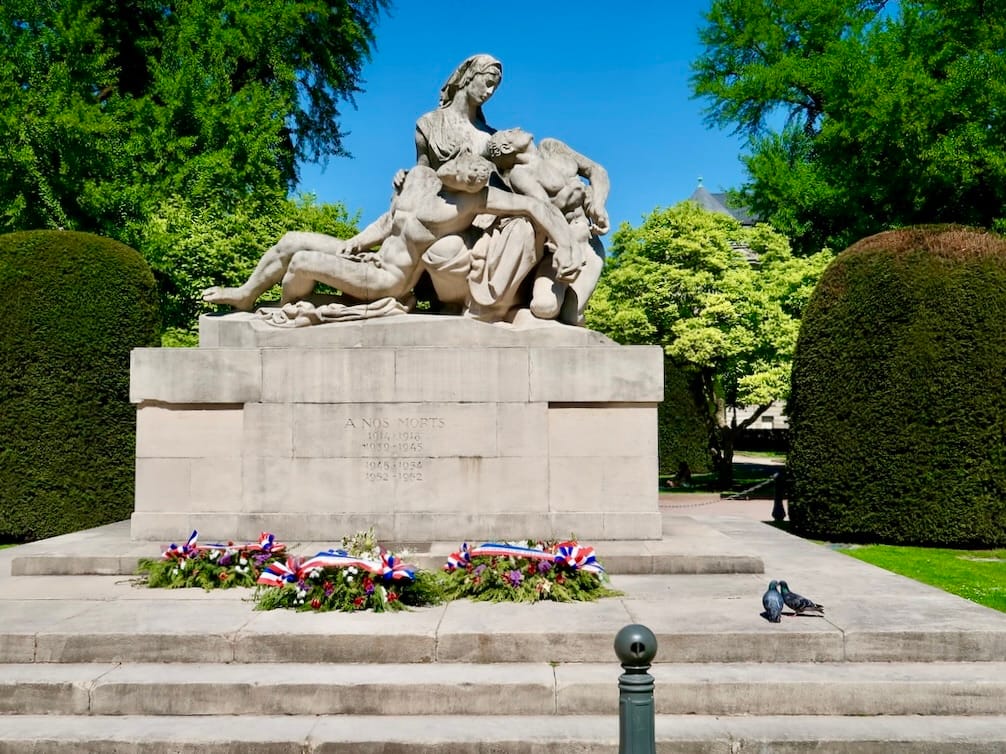
Neustadt was built by the Prussians between 1871 and 1918 as a new city centre. The area is characterized by wide boulevards and pompous public buildings in historical styles. A monument on the Place de la Republique shows a grieving mother with two sons, one fell on the German side and one on the French side in war. In death, they are reconciled in a handshake. We were there on a Sunday, when people were enjoying the spring sun on benches and lawns. As we passed the university campus, groups of young people were dancing hip-hop to loud music. A female French student was happy with the international study environment and its many social activities.
A boat trip on the Ille River and canals with bridges and locks gave new perspectives on the city. The guided tour was repeated in many languages.
We spent a day in the European Quarter, where we walked between modernist buildings in glass, and concrete designed by renowned architects and ended in the life-giving oasis Parc de l’Orangerie. Along the way, we passed the Council of Europe and the European Court of Human Rights, whose judicial practice is under pressure from politicians who want a strict immigration policy.
It was a great experience to visit the European Parliament and retrace the story of how the European Union grew out of the efforts of French Foreign Minister Robert Schuman to reconcile Germany and France after World War II. The plenary chamber is where parliamentarians, who commute between Brussels and Strasbourg, meet a few days each month. As we sat in the empty chamber, it was filled with young people learning about the EU.
Outside the parliament stands a sculpture of the Phoenician princess Europa, who was abducted from modern-day Syria by the god Zeus in the form of a bull. The artwork was given to the people of Europe by the island of Crete, where, according to myth, the couple settled and had three sons. We saw it as a reminder that the continent may have been named after an early immigrant.
Paris with timely architecture and art
Our visit to Paris included both known and new sights. We stayed at a campsite in the Bois de Bologne with a view of the Seine. A boat trip on the river starting from the city's oldest bridge, Pont Neuf, refreshed our overview of the central districts. A knowledgeable guide told in French and English about the sights. On hot days, the river forms a long, cooling passage where people meet. Houseboats with plants and garden furniture on the deck are private oases. Sidewalk cafés and parks are public places for a rest. While we were in France, smoking was allowed here, it was banned in parks and several other places in July 2025. In outdoor cafés, it is still permitted to enjoy a cigar. We noticed new initiatives to make Paris a green metropolis - city bikes, cycle routes, an urban forest in front of the city hall and bathing areas in the Seine.
Walking along the historic axis from the Louvre to the Arc de Triomphe, which celebrates military victories, we got a view of Grande Arche de la Fraternité, which celebrates humanitarian ideals. The building is a striking element in the modernist district of La Défense. It was designed by the Danish architect Johan Otto von Spreckelsen. On the route, we passed the Tuileries Garden, the Place de la Concorde, the exclusive shops of the Champs-Élysées and the Danish House, which conveys Danish culture. We saw President Macron’s guarded residence, the Élysée Palace. We also took a detour to Place Diana with a copy of the flame on the Statue of Liberty’s torch and greetings to the late British princess.
On a walk in the Latin Quarter, we passed the Sorbonne University, which was the epicentre of the student uprising in 1968. The rebels broke up the paving under the slogan typical of the time: “Under the paving stones, the beach.” We also saw the Panthéon, which is the burial church of the nation's luminaries. The Arène de Lutèce, where Roman gladiator fights have been replaced by French boules matches. Le Vieux Campeur's shops with functional outdoor equipment and the traditional book stalls along the Seine. The tour ended at a cozy café with local guests.
Paris' covered passages were built from the late 18th century onwards. They contain a delightful mix of small cafés and shops selling antiques, second-hand books, postcards, stamps, coins, walking sticks, etc. Our walk through the passages Panoramas, Verdeau and Jouffrey was a little journey through time. Here you can shop and stroll in classic surroundings, comfortably sheltered from the weather outside.
The more than 800-year-old Gothic Notre-Dame Cathedral was reopened after the fire in 2019, thanks to political determination and skilled craftsmen. Together with countless others, we walked through the carefully restored church. In a large tent in front of the church, baguettes were baked and sandwiches were made for a competition to see who could make the best. The long loaf was included on UNESCO's list of intangible cultural heritage in 2022. It is an important element of the French diet, which we adopted on our trip.
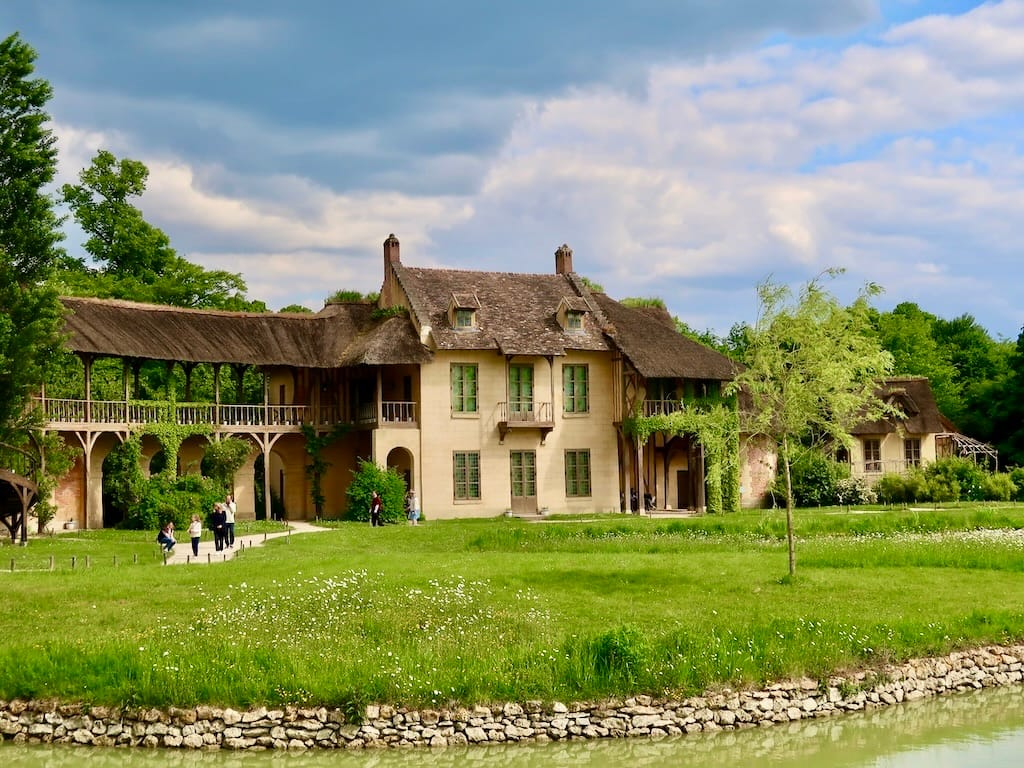
We visited Versailles on May 8, the day of France's liberation after World War II. It turned out to be a day off, which many people used to visit the Sun King Louis XIV’s mighty baroque palace and park from the late 17th century. Therefore, there were no tickets, so we could go in and see the palace again. Instead, we explored the palaces of le Grand Trianon, le Petit Trianon and Louis XVI’s Queen Marie Antoinette's romantic village. Which is inspired by Jean Jacques Rousseau's liberating view of nature and humankind. In 1793, the queen suffered the fate of being beheaded by the guillotine on the Place de la Concorde. The French Revolution drew inspiration from the ideals of the Enlightenment and from the social inequality that the court and queen's life in luxury represented. The revolutionaries formed the motto of the republic, which can still be found on the euro coins: "Liberté, égalité et fraternité."
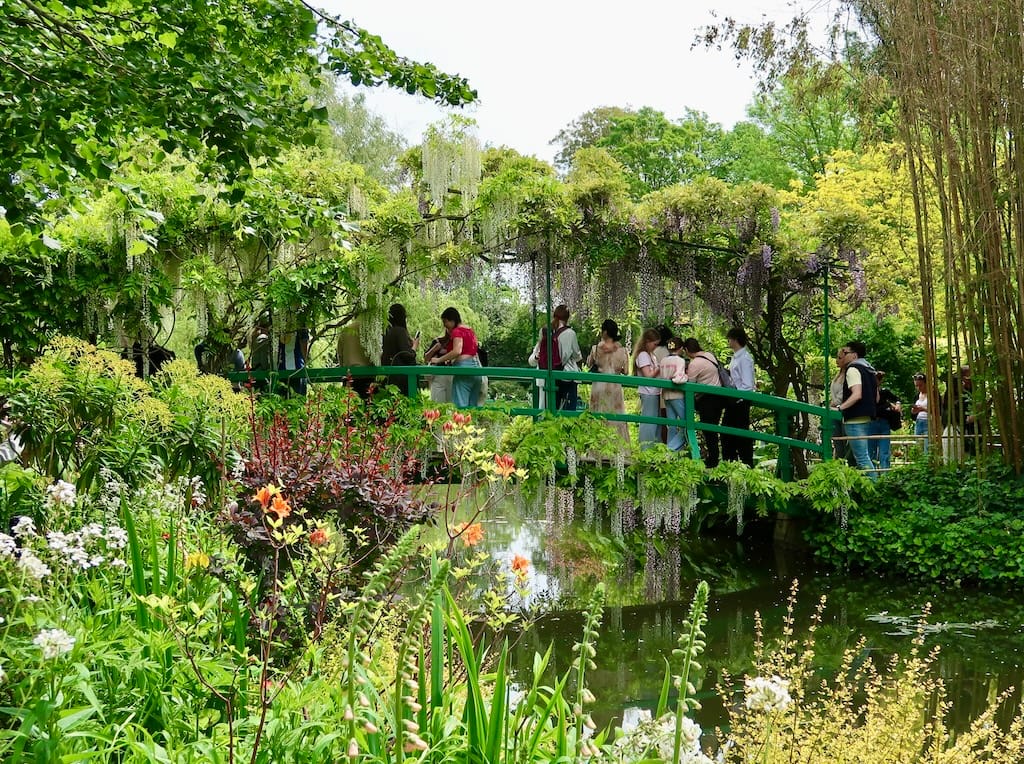
In the decades around the turn of the last century, Paris was the art capital of Europe, and the city attracted talents from many countries. In the creative environment, art was made that both depicted and challenged the modern world. The painters took their palette and brushes out of the studio, captured light and shaped new artistic isms. We saw their works in the city's museums. The Musée d'Orsay exhibits Impressionists and Neo-Impressionists in the beautiful former train station. The oval rooms of the Musée de l'Orangerie are shaped in dialogue with Claude Monet's meditative paintings of water lilies. He found the motifs in his Japanese-inspired water garden in Giverny, which we visited on our way to the Normandy battlegrounds. From today's perspective, it is difficult to understand the astonishment and outrage that artists such as Monet, Manet, van Gogh, Gauguin, Renoir, Cézanne, Picasso and others aroused. In the course of the 20th century, they achieved admiration and fame.
At the Palais de Tokyo, we saw works by contemporary artists who are developing 21st-century art on a global scene. It was hard to keep track, but we registered activism, interactivity and inspiration from traditional ethnic art. We also visited the Banksy Museum in raw concrete rooms that matched the British street artist’s stenciled comments on war, climate, class and gender. Here we finally found “Season’s Greetings”, the image of a boy catching snowflake-like ash with his tongue. It was removed hours before we reached the humble garage in the Welsh industrial town of Port Talbot where it was created in 2019.
We passed the world’s largest art museum, the Louvre, and the iconic Centre Pompidou, both of which are under renovation. We saved a revisit to them for a future trip to Paris.
Normandy with battlegrounds
In Normandy, we were based at campsites near Sword Beach, where the British landed on D-Day, and at Omaha Beach, which the Americans captured. The Allies divided the coast between them when they set off from England towards German-occupied France on June 6, 1944 to begin Operation Overlord. This was the beginning of the end of World War II.
At the Mémorial de Caen, visitors are met by a kit for an American Willys Jeep in a transport box. The museum provides insight into the history of war seen through French eyes with a view of the world. The humiliation of Germany after World War I by The Versailles Peace. The invasion of France in 1940. The division of the country into an occupied area and an area under General Pétain's Vichy government, which collaborated with the Germans. Occupation of the entire country in 1942 after the loss of the North African colonies. The French Resistance and the efforts of the Free French Forces. The battles on D-Day. The return of the later President General de Gaulle from his English exile. The division of Germany and the Cold War up to the fall of the Berlin Wall.
We visited Sword Beach with the Musée du Mur de l’Atlantique, which tells the story of German soldiers in one of the concrete bunkers along the continent’s west coast from Norway to Spain, built to prevent an invasion. Gold Beach with the pontoon port Mulberry B, which left large concrete blocks in the water. Pegasus Bridge, where German and British units fought. Omaha Beach with the Overlord Museum, which displays military equipment and scenes with soldiers from both sides in soundscapes of war noise. On the beaches, it was easy to imagine how terrifying it must have been to cross the English Channel at night and wade ashore in a foreign country, while the enemy fired from land.
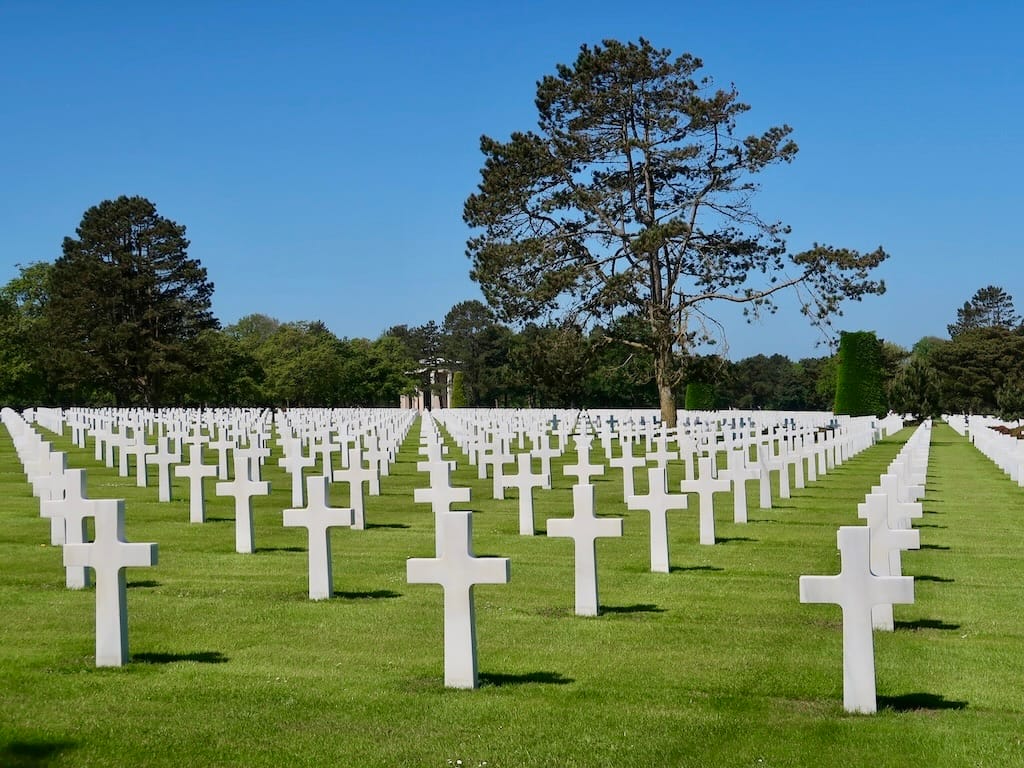
The American cemetery with endless rows of white crosses and the German cemetery with brown tombstones and stone crosses were thought-provoking. Here it became clear that the battles cost the lives of thousands of often very young men. We met visitors, some of whom were looking for the graves of relatives.
There are more war memorials and war museums in Normandy than we could see in a week, but we got a clear impression of the war and its horrors. The participation of Danish sailors and soldiers contributed to Denmark being recognized as an ally.
William the Conqueror with castle and cartoon wallpaper
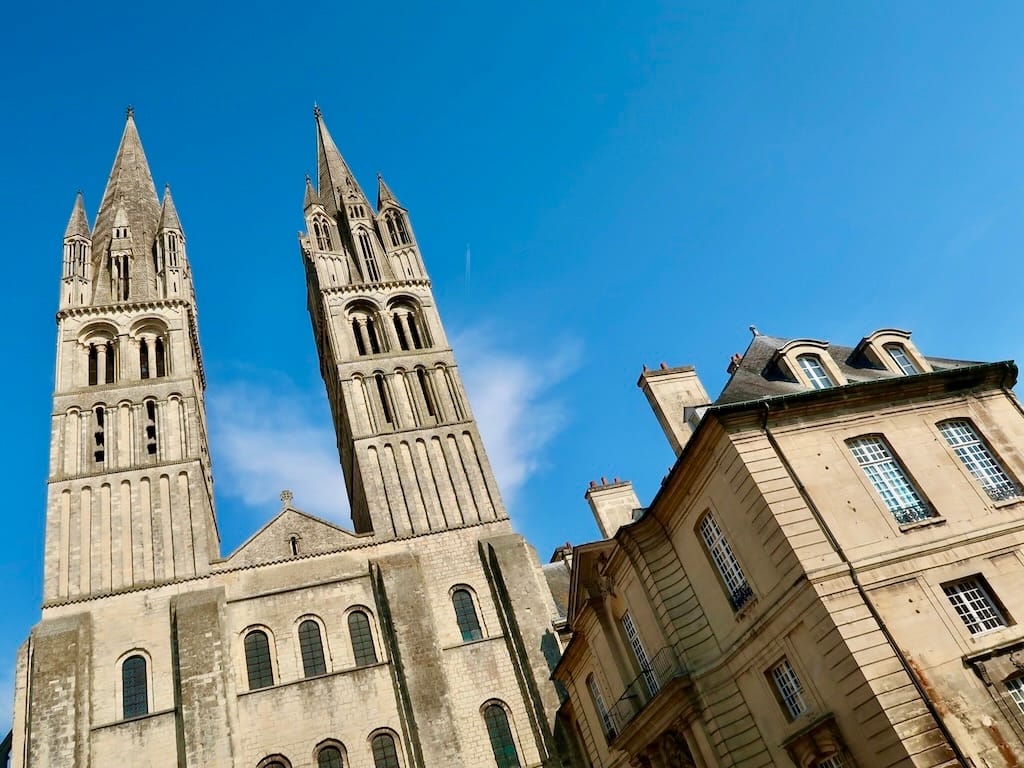
In Caen, we saw the castle founded by the Viking descendant William the Conqueror and the associated cultural history museum. Guided by locals, we searched for the ruins of his contribution to the construction, which has many historical layers. The search came to a halt when a woman meant, that experts were still investigating where it was. We also saw William's originally Romanesque church of Saint-Étienne, where a tomb in front of the altar contains the Norman ruler’s femur. The rest of the body was destroyed during the religious wars of the 16th century.
Bayeux was not hit by the Allied bombardments in the Battle of Normandy. We stopped in the well-preserved city to see the Bayeux Tapestry. An approximately 70-meter-long embroidered cartoon about the Battle of Hastings on October 14, 1066. This led to the death of the English king Harold Godwinson, so that William could take over the throne. He believed that he had been promised this. The tapestry is an important, but not entirely reliable source for the course of the battle and customs in the Middle Ages. The battle scenes illustrate that war was also a bloody affair at that time. William's half-brother Bishop Odo had the story made for Bayeux's new cathedral. It was probably embroidered by nuns in an English monastery. The work was almost destroyed during the French Revolution. We saw it behind thick glass accompanied by an audio guide in many languages, including Danish.
The museum is to be renovated, and from the summer of 2026 the tapestry is on loan to the British Museum in London for a year. The cultural exchange was announced by President Macron and Prime Minister Keir Starmer at the British Museum in July 2025. Macron and Starmer also signed a defense agreement and an agreement on a pilot project to limit illegal immigration across the English Channel.
Before driving further south, we bought apple cider, calvados and cheeses from local producers.
Mont Saint-Michel Bay with Abbey, Tide and Mussels
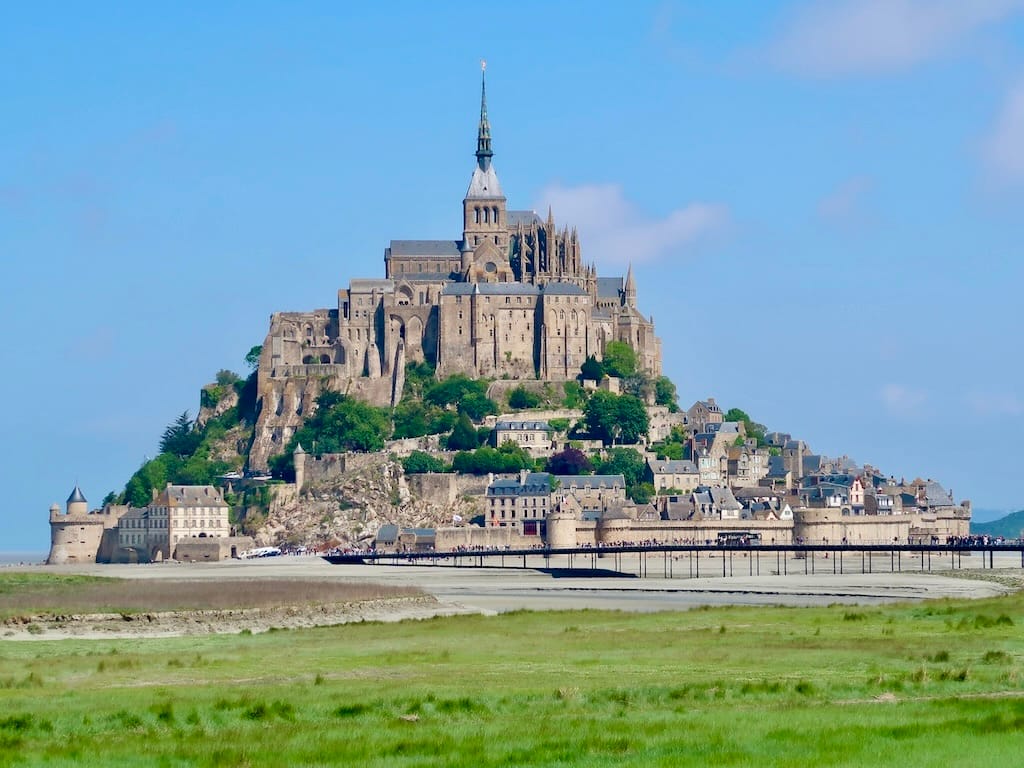
We explored Mont Saint-Michel Bay from a campsite in Cherrueix. Our first excursion was to the tidal island of Mont-Saint Michel on the border between Normandy and Brittany. Throughout history, it has been home to churches, monasteries, fortresses and prisons. Bishop Saint Aubert of the nearby town Avranches dreamed that the Archangel Michael wanted a monastery on the island Mont Tombe. After the third request, when the angel burned a hole in his head, the bishop, according to legend, understood the message. He had the first chapel built in 709.
In the following centuries, the island became home to a complex of Romanesque and Gothic buildings. It was also fortified to resist enemies. William the Conqueror supported the establishment of a Romanesque church, and Mont Saint-Michel is depicted on the Bayeux Tapestry. The monastery became a place of learning with a library and a writing room, where monks copied illustrated books onto parchment.
During the French Revolution, it was closed and converted into a prison. Pilgrims have been visiting it since the Middle Ages, and today 3-4 million pilgrims and tourists come every year. A group of monks and nuns still live on Mont Saint-Michel. Visitors park inland and walk or take a bus across the bridge to the island. After passing souvenir shops and cafés, we reached the beautiful religious buildings. The view of the wadden sea from the top was a breathtaking reward for the climb.
The Mont Saint Michel Bay has tidal differences of up to 15 meters. The wide sandy beaches invite to surf in small, fast three-wheeled vehicles with sails. The bay is home to mussel farming, the fishermen have immigrated from the south because the mussels there were affected by disease. We got an impression of the rich wildlife and mussel production on a trip with Le Train Marin. A tractor with a passenger carriages that Annabelle virtuously drove through water holes to a large fish trap that her family had used for generations. She brought the contents of fish, squid, jellyfish and crabs onto a table and explained the species enthusiastically. She also showed the racks with horizontal strings, where the mussels are grown until the strings can be wrapped around vertical poles. The mussels are harvested after a couple of years.
In the mussel town of Le Vivier-sur-Mer, we saw the fishermen's amphibious vehicles, which drive at low tide and sail at high tide. It was not the season for mussels, but we bought oysters and clams. They went into a delicious meal with oysters as a starter, clam soup with white wine and flute as a main course, and cheeses, coffee, calvados and macarons for dessert. We found that with a little practice, a Swiss Army Knife can be used to open oysters.
Bracieux with the castle of Chambord and gourmet offers
In the Loire Valley, the royal castles lie close, we chose to visit Chambord. Our base was Camping Huttopia les Châteaux in Bracieux. It is an attractive nature campsite in a cozy town with many small shops and restaurants. The campsite's young manager Eva Leal gave us her life story in an interview. See Eva's story here.
In the restaurant, Le Rendez-vous Des Gourmets with a red Michelin sign from 2025 on the facade, we had a three-course dinner on Lars' birthday. The restaurant is housed in modest surroundings, the service was polite, the meal was a terrific taste experience and the price was absolutely affordable. Here we got an impression of French food culture with high-quality ingredients and preparation. Chocolatier Max Vauché near the campsite sold exquisite chocolate made on site. The tempting tastings required self-control.
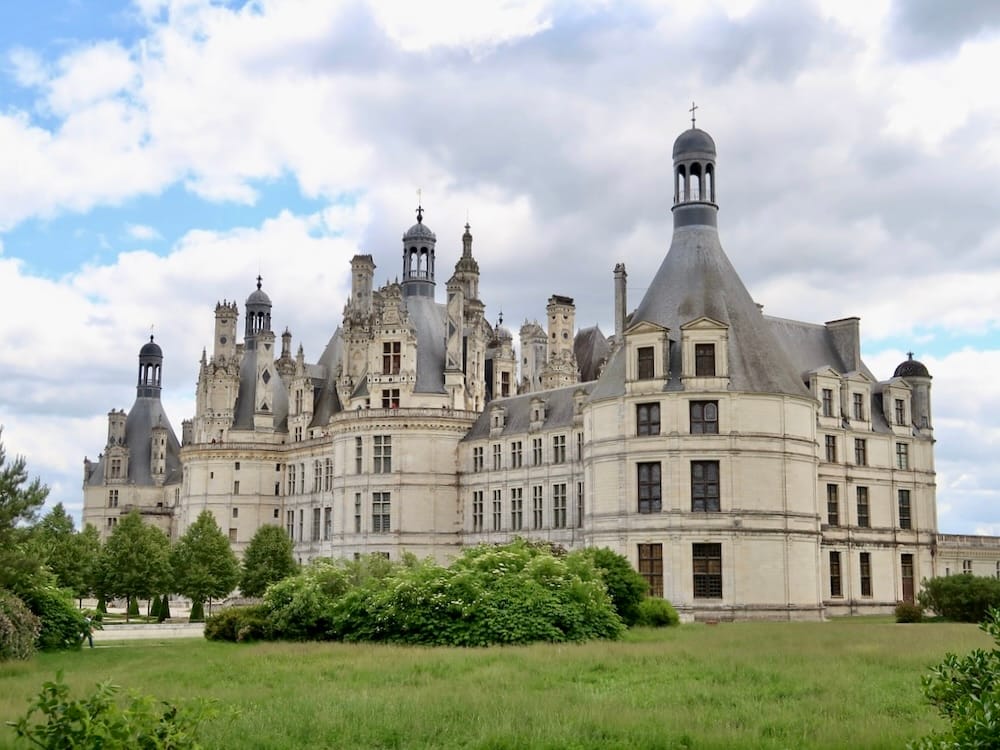
We cycled eight kilometres to Chambord on small roads and paths through the town, the forest and the park. The trip was a fitting prelude to the Italian-inspired Renaissance castle. It was built from 1519 to 1550 as a hunting lodge by François I and decorated for parties by the Sun King Louis XIV. The castle was large and cold, so the French kings only lived there for short periods. After a time with other owners, it was taken over by the state in 1930. The main building is square with corridors like a Greek cross. In the centre is an elaborate double spiral staircase. Like other parts of the building, it is believed to have been designed by the Italian multi-artist Leonardo da Vinci. A recreated French park with geometry, symmetry and perspective spreads out from the castle.
Oradour-sur-Glane with grim war memories
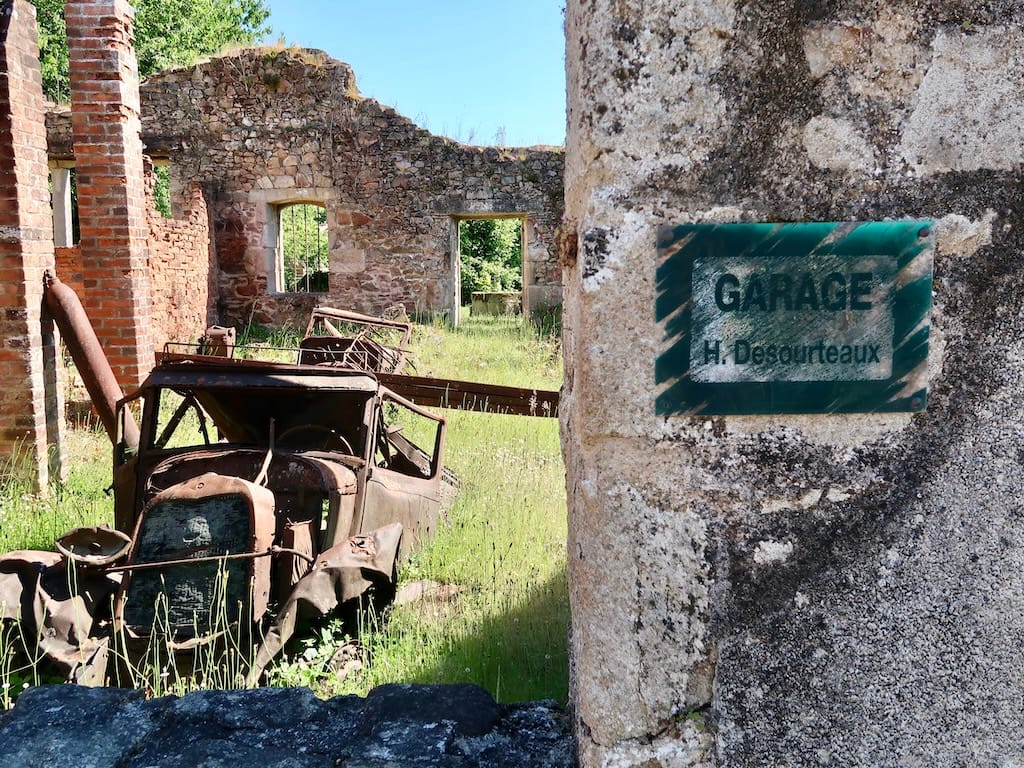
Oradour-sur-Glane was the scene of a massacre carried out by the Waffen SS in July 1944. 642 inhabitants were killed and the town burned down in retaliation for alleged resistance activities. Burnt-out houses and rusted everyday items now stand as a monument. A memorial centre tells the story and exhibits portraits of the victims, who rest in a cemetery on the outskirts of the town. General de Gaulle wanted the ruins preserved to remind humanity of the barbarity of war. We visited the site with others who, like us, viewed and mourned the senseless assault on a peaceful French village.
Avignon with the Papal Palace and the Miraculous Bridge
We had a few days rest at a family campsite. Then drove through the central French countryside with vast cornfields and deserted mountain peaks to Avignon in Provence. It is located where the Rhône and Durance rivers meet, here we camped on the île de la Barthelasse and took a small ferry to the centre.
On walks we experienced the well-preserved city's palaces, squares, streets and alleys. It is characterized by the French Pope Clement V moving the papal seat to Avignon from Rome in 1309. The reason was unrest there and a desire to please the French king. This created a commercial and cultural flourishing. Avignon was home to seven popes before Gregory XI moved the papal seat back to Rome in 1377. Until 1417, several "antipopes" were appointed with their seat in Avignon.
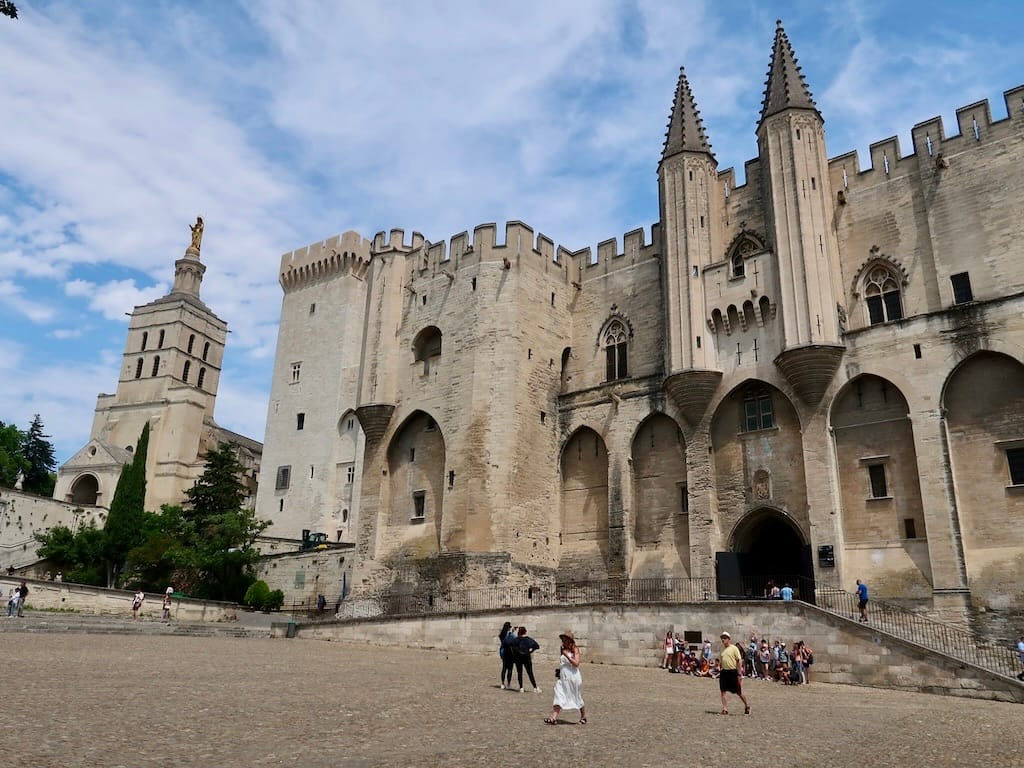
The impressive papal palace was built in stages. The oldest part is robust Romanesque, the newest is grandiose Gothic. The palace and its gardens have been a comfortable setting for exile. It was owned by the Vatican until 1791. During the revolution, the buildings were used as a prison and subsequently as barracks, becoming a museum in 1906.
The ferry ride across the Rhône offers a fine view of Pont-Saint-Bénezét, which only partially reaches the opposite bank. According to legend, the bridge was built by the shepherd Bénezét in the 12th century at the request of God. The townspeople received the fifteen-year-old shepherd's project with skepticism, but some miracles helped the construction. He was buried in the bridge's chapel to Saint Nicolas, and was later beatified and canonized. The river destroyed the bridge several times, and it was rebuilt. After the last time at the end of the 17th century, it has been an unfinished monument. It is the setting for the children's song "Sur le Pont d'Avignon," which has inspired music and dance videos on YouTube.
The cobbled Rue des Teinturiers runs along a branch of the Sorgue River. It was home to Avignon's thriving textile industry, powered by watermills. Today, the creative class has moved into the street, with small shops, cafes, theaters, and art on tree trunks with bark peeled off.
Vernon with a family visit
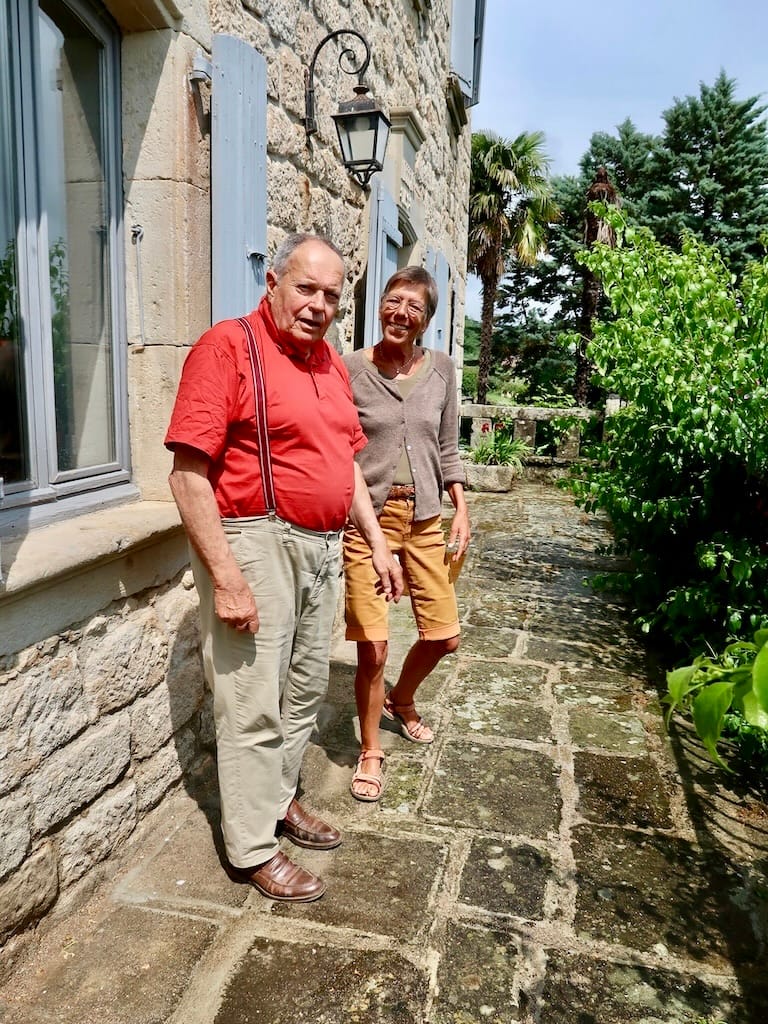
A trip north along narrow mountain roads took us to Vernon, where we settled in a small campsite with a view of the town and the valley. The nearby church added to the atmosphere by striking every hour. We came there to visit Claude Gateau, a member of Hanne's family, whom she had met in childhood. It was a hearty reunion over a lunch of French delicacies at Claude's home. He has withdrawn from a working life as an entrepreneur in the cosmetics industry in France and India. He now lives in a former wine farm with a large garden and plenty of space for guests, antiques and art.
Claude speaks Danish, but we chose English for conversations about family history, French-Danish cultural encounters and the world situation. Claude's grandfather Jean Jacques Emile Gateau came to Denmark as an associate professor at the University of Copenhagen and married Hanne's grandfather's sister Ragna Finsen in 1918. His grandfather translated works by Søren Kierkegaard and Hans Christian Andersen into French. We agreed that it is important to maintain optimism in times of trouble, and parted with a desire to meet again.
Pont du Gard with Roman architecture
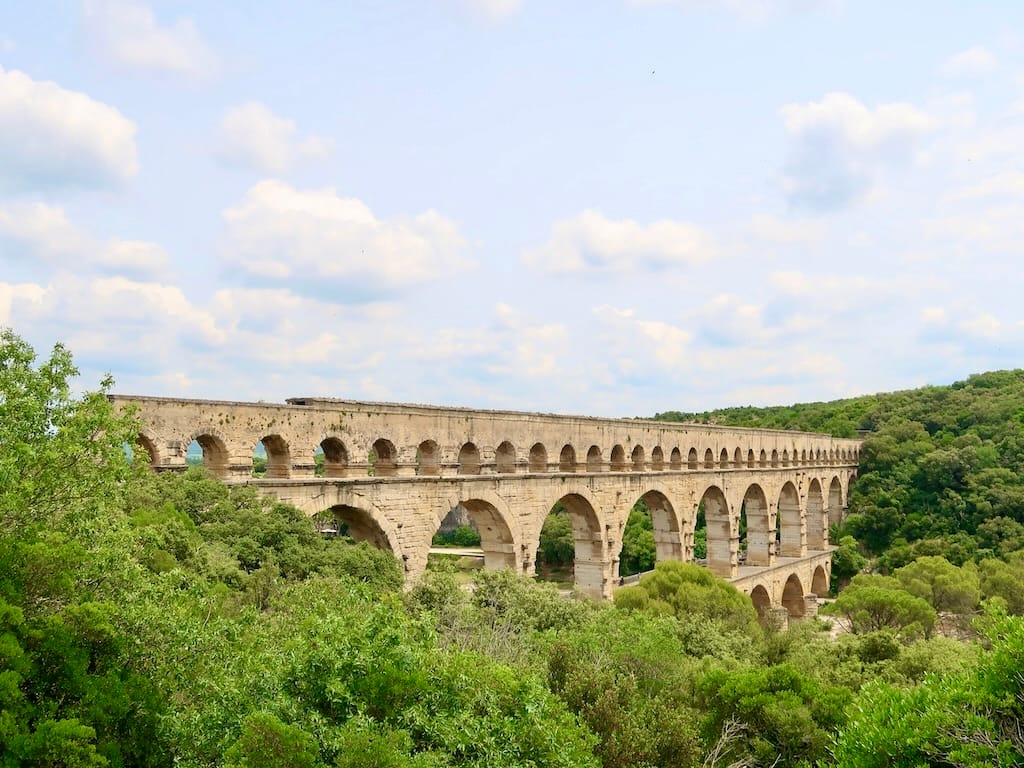
On our way to the Riviera, we stopped at the Roman aqueduct and bridge Pont du Gard over the Gardon River. The impressive structure was built as part of a 50-kilometer-long pipeline that supplied current Nîmes with water. It was an important city in ancient Roman Gaul. The bridge was completed around 19 BC. It has three levels, the upper one serving as an aqueduct, the lower one as a road. The tons-heavy stone blocks are carefully aligned, and no mortar is used. The arches of the bridge have withstood tidal waves and inspired builders in posterity. After centuries of decay and plundering of building materials, Napoleon III decided that the building should be restored in the mid-19th century. The historical monument is introduced in a modern visitor centre with exhibitions, films and a library. We saw it together with tourists, hikers, canoeists and bathers.
The Riviera with azure sea and wealthy people
We reached the Riviera after an overnight stay. Here we saw that the Mediterranean is actually azure blue on the French Côte d'Azur. Our son Mads came to visit, so our first base was a glamping tent with two sleeping cabins, kitchen, bathroom and terrace in Cagnes-sur-Mer. The second base was, as usual, our Bulli at a campsite near the beach in Antibes. From these places, we took trips in the area to experience the atmosphere, architecture and art treasures. We felt the closeness to Italy. The Mediterranean climate and light have attracted wealthy people and artists to the Riviera since the 19th century.
When we visited Nice, the city was hosting the UN conference on the oceans UNOC3. The event brought together stakeholders and government leaders from many countries. Areas by the port were closed to unauthorized traffic, and black limousines with police escorts served the guests. The conference also had an artistic dimension Nice 2025 Biennale des Arts et de l’océan. However, we gave up on seeing most of the exhibitions because it was difficult to park in the busy city.
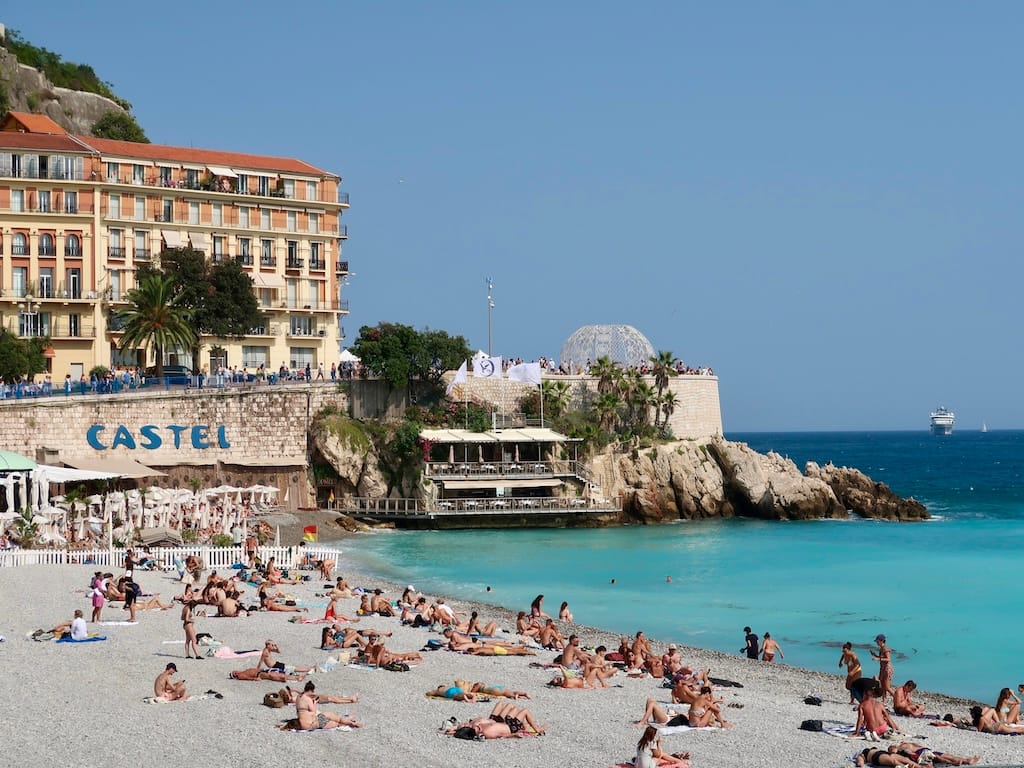
We walked around the city and along the Promenade des Anglais, which was donated by the English in 1824. The British Queen Victoria spent several winters in Nice in the 1890s, and a statue of her stands in front of the Hôtel Régina, where she lived. Originally a path, the promenade is now a boulevard with space for cars, bicycles, and pedestrians. We saw people in casual summer clothes, men in suits, women in stylish dresses, roller skaters, and cyclists. On the beaches, lightly dressed bathers enjoyed the sun and the water.
On Bastille Day, July 14, 2016, the promenade was the scene of a terrorist attack when a truck drove into a crowd, leaving many dead and injured. With that tragedy in mind, the presence of friendly, armed police was reassuring.
In Cagnes-sur-Mer, in addition to the Green Park campsite where we stayed, we got an impression of the central town with shops and French everyday life. In Antibes, we experienced the relaxed atmosphere of the cosmopolitan holiday town and the luxurious boats in the harbour. A café manager said that many of them were owned by foreigners with a desire for good food, which he delivered. On walks in the town, we heard several languages. The beach near the campsite offered refreshing swims.
Artists with dreams of beauty and peace
We had a special focus on the art on the Riviera, which added new facets to our impressions of the museums in Paris. In Cagnes-sur-Mer we saw the Musée Renoir. It is housed in the villa where the painter Pierre-Auguste Renoir spent the last years of his life until 1919. You visit the family home with furniture and works by himself and fellow artists. Renoir suffered from rheumatoid arthritis, his wheelchair stands in front of the easel in the studio. The house is surrounded by a garden with olive trees.
In Nice we visited La Musée du Message Biblique Marc-Chagall. It has biblical works in blue tones, and other examples of his dreamy, playful art. A special exhibition showed Chagall's mosaics. The collection is based on donations from the painter and his wife, who lived in the city. The museum was created in collaboration between the architect André Hermant and Chagall himself, it opened in 1973.
The beauty-seeking and experimental artist Henri Matisse had his home in Nice from 1917 until his death in 1954. Le Musée Matisse has a large collection of works, a special exhibition told about his relationship with the Mediterranean. In the nearby town of Vence we visited the Dominican convent's Chapelle du Rosaire from 1951. Here, Matisse designed the architecture, interior, art and chasubles as a harmonious whole. He was not religious, but considered the chapel a culmination of his lifelong, demanding artistic pursuit.
Musée Picasso in Antibes contains works by Pablo Picasso and other modern artists. The collection was founded by Picasso himself during a stay in the city in 1946, and has since been supplemented by donations and purchases. His fascination with sensual women as models, muses and partners is obvious. The work la Joi de Vivre with flute-playing creatures from ancient mythology, dancing goats and a curvy nymph, reflects Picasso's joy of life during this period. His working processes are documented in Michel Sima's black-and-white photographs.
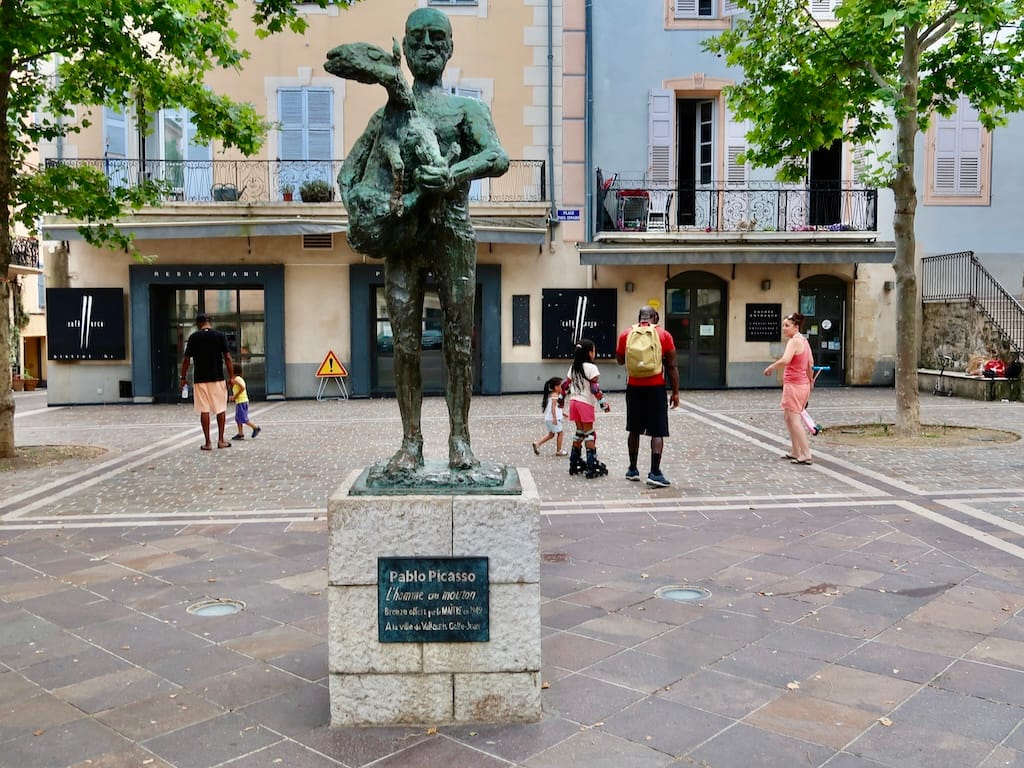
We also visited the charming town of Vallauris, where Picasso lived after his time in Antibes. Together with colleagues, he added new artistic dimensions to the traditions of local potters. The development can be followed at the Musée de la Céramique in a former monastery. The Musée National de Picasso is a Romanesque chapel, the walls and ceiling of which are covered with the work la Guerre et la Paix. The communist and peace activist Picasso illustrated the dark horrors of war and the bright calm of peace. We saw the work as a commentary on our journey through French battle fields and the world’s many ongoing wars.
Perpignan with Catalan culture and internment camp
We found fresh nectarines and apricots in a fruit stand with the red-yellow Catalan flag. Now we had reached the Pyrenees near the border to Spain. We explored Perpignan and the surrounding area based on campsites by the recreated lake Lac-de-la-Raho and in Argelès-sur-Mer, which has a promenade, tourist stalls and a sandy beach.
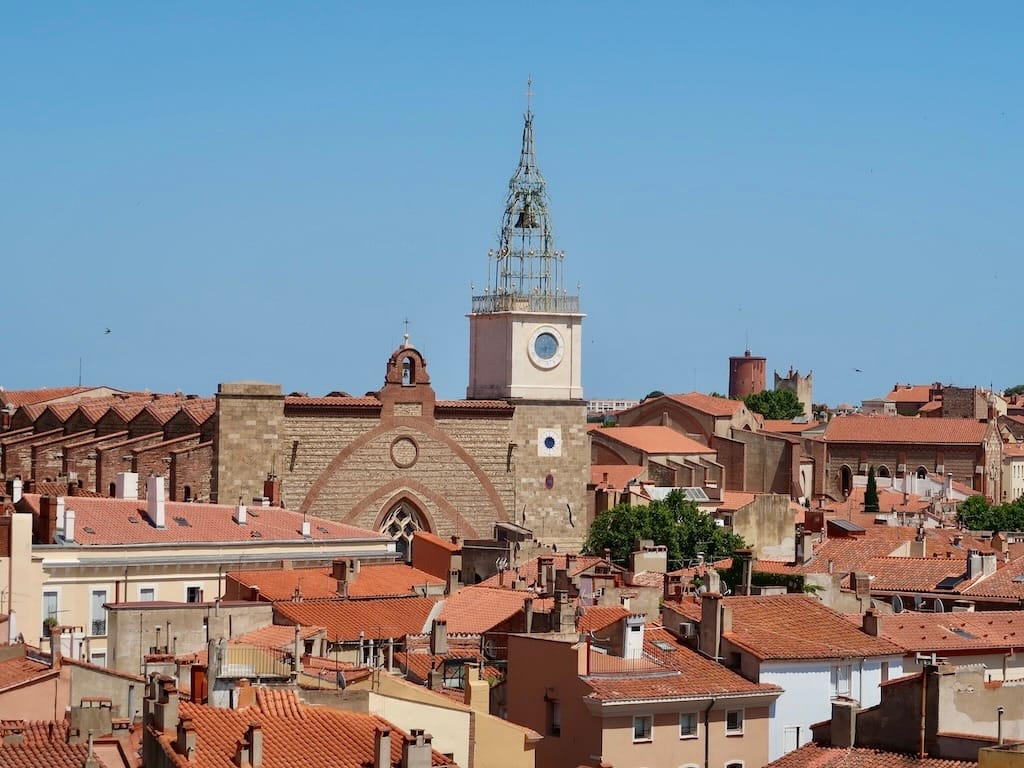
Perpignan is a welcoming city, we walked the streets and squares with signs in French and Catalan. Le Castillet is a castle from the 14th century, which houses the Musée Casa Pairal. The museum's permanent exhibition tells about the city's history, a special exhibition conveyed Catalan folk culture. The Cathédrale Saint Jean Baptiste in medieval Gothic is characterized by Spanish building traditions. The municipal building with a stately wedding hall has been situated in the same place since the Middle Ages. La Casa Xanxo is a townhouse from the 16th century with models of Perpignan's development and an architecture centre. The Art Nouveau Hôtel Pams, once owned by a family of manufacturers and politicians, is now used for cultural purposes. At the shop Les Toiles du Soleil, Hanne bought canvas with beautiful colors and patterns.
The Gothic Le Palais des Rois de Majorque from the end of the 13th century was the residence of the King of Majorca for almost a hundred years. His kingdom included areas in modern-day France and Spain. Large figures of the royal couple are still carried in procession during traditional celebrations. Locals meet in a town square and join hands in a circle to dance the Catalan sardana. We had hoped to see the dance again, as we have experienced in Barcelona, but the season had not started. Everyone we asked thought that Catalan culture is important to Perpignan. Few spoke the language, some said that their grandparents mastered it.
The Mémorial du Camp de Rivesaltes is located north of Perpignan in a desolate area with a merciless climate. The camp was founded in 1939 for military purposes, in the following decades it housed victims of the Spanish Civil War, World War II and the Algerian War. You see rows of barracks, and the story is told in a museum from 2015 by architect Rudy Ricciotti. The cleverly submerged building contains moving testimonies of people who suffered during conflicts in the 20th century. We experienced the internment camp as both a memorial and a memento. It shows respect for the past and warns the present that climate change, wars and remigration are displacing new groups from their homes.
Bélesta with village life and hospitality
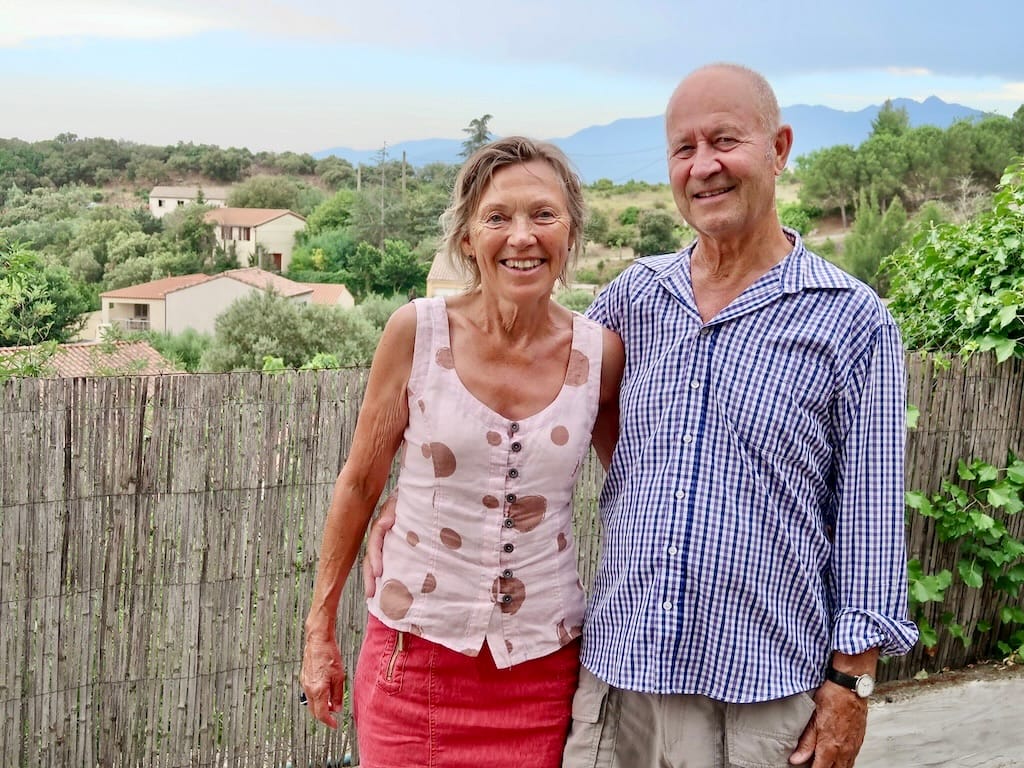
Our friends from Odense, Leif Søndergaard and Rie Hedegaard welcomed us heartily when we reached the village of Bélesta in the Pyrenees via mountain roads. Leif has had connections to France, French culture and language since his youth. The ties were strengthened by a stay in Perpignan in connection with a PhD in medieval folk culture.
Now Leif and Rie have a holiday home with a view of Mount Canigou, which is the spiritual home of the Catalan nation. The days spent in Bélesta were a meeting with a village community of around 220 residents, which constitutes an independent municipality. France has not carried out a municipal reform and has around 35,000 small municipalities.
We settled at the village campsite and shortly after saw three large fire engines make a U-turn on a narrow road. It was a drill to be prepared for forest fires. We arrived in Bélesta with a heat wave and temperatures of 35 degrees plus. Swimming trips to a river and to a beautifully renovated hotel with an ecologically cleaned pool were refreshing.
On the first evening, people gathered on the roof of the museum to light a powerful lamp, the signal was answered with similar lights from the surrounding mountain towns. In this way, the tradition of signal fires as a warning of enemies and other dangers is kept alive.
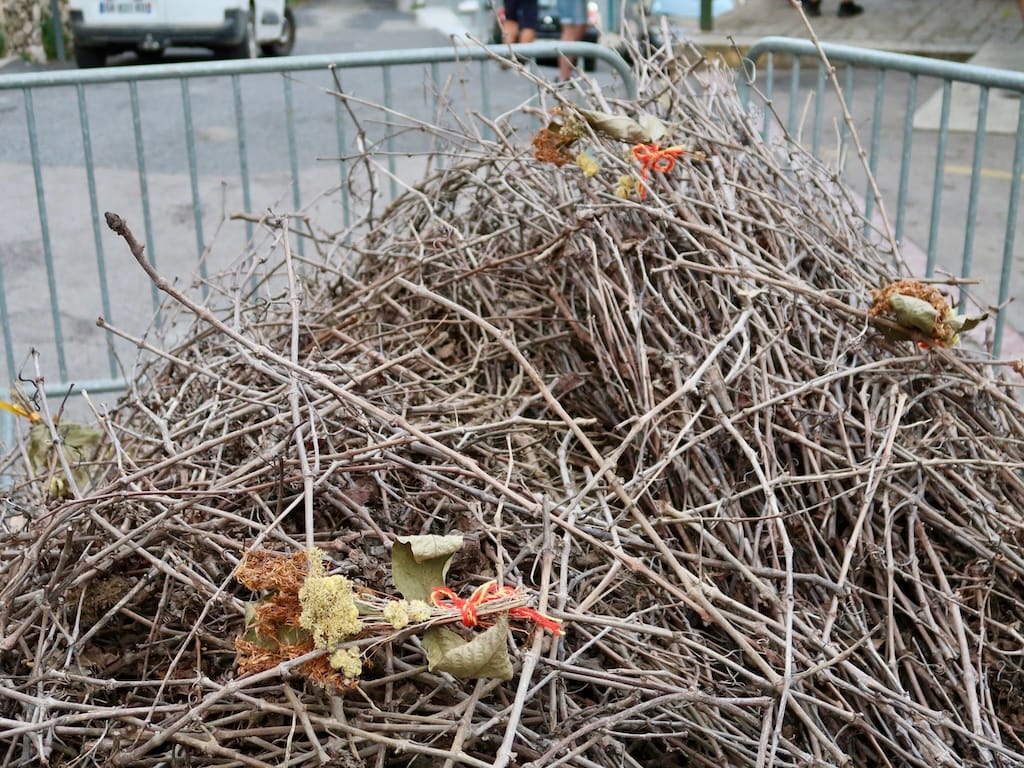
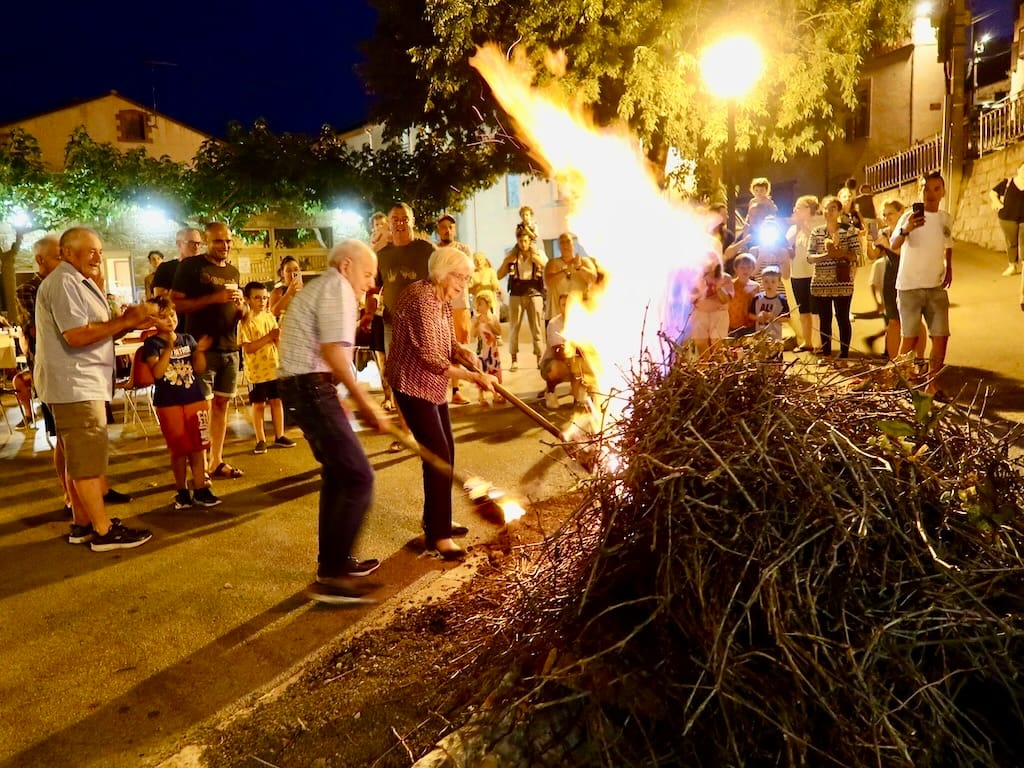
The next evening, the residents celebrated St. Hans with a communal meal and a small bonfire in the square in front of the town hall. We were well received in a community where people knew each other and took the opportunity to exchange news. The fire was picked up by runners on Canigou and carried in procession to the oldest married couple in the village, who lit the bonfire. A flame is kept in Perpignan’s castle and brought up the mountain to be “reborn”. Small bouquets of flowers from Canigou bring good luck and are placed on the bonfire the following year. The one we bought has had the intended effect.
We got local wine at Château de Caladroy, which has been producing since the 19th century. A friendly woman served tastings and told us about the wines and the historic castle. In the evening, Leif and Rie invited their neighbors Nadine and Eric Paihassa for tapas and wine.
With our hosts as interpreters, we had great conversations about Eric's life story and about Nadine's memories from her childhood and youth in Bélesta. The evening ended with them showing us the beautiful house they built themselves. See Eric's story here.
Homeward journey with stops
After two months in France, we were full of impressions and headed for Denmark. A mechanic assured us that a front tire with a small tear would probably make the trip. It did, and we reached Odense with overnight stays in Lyon, France, Karlsruhe and Hannover, Germany.
December 2025.